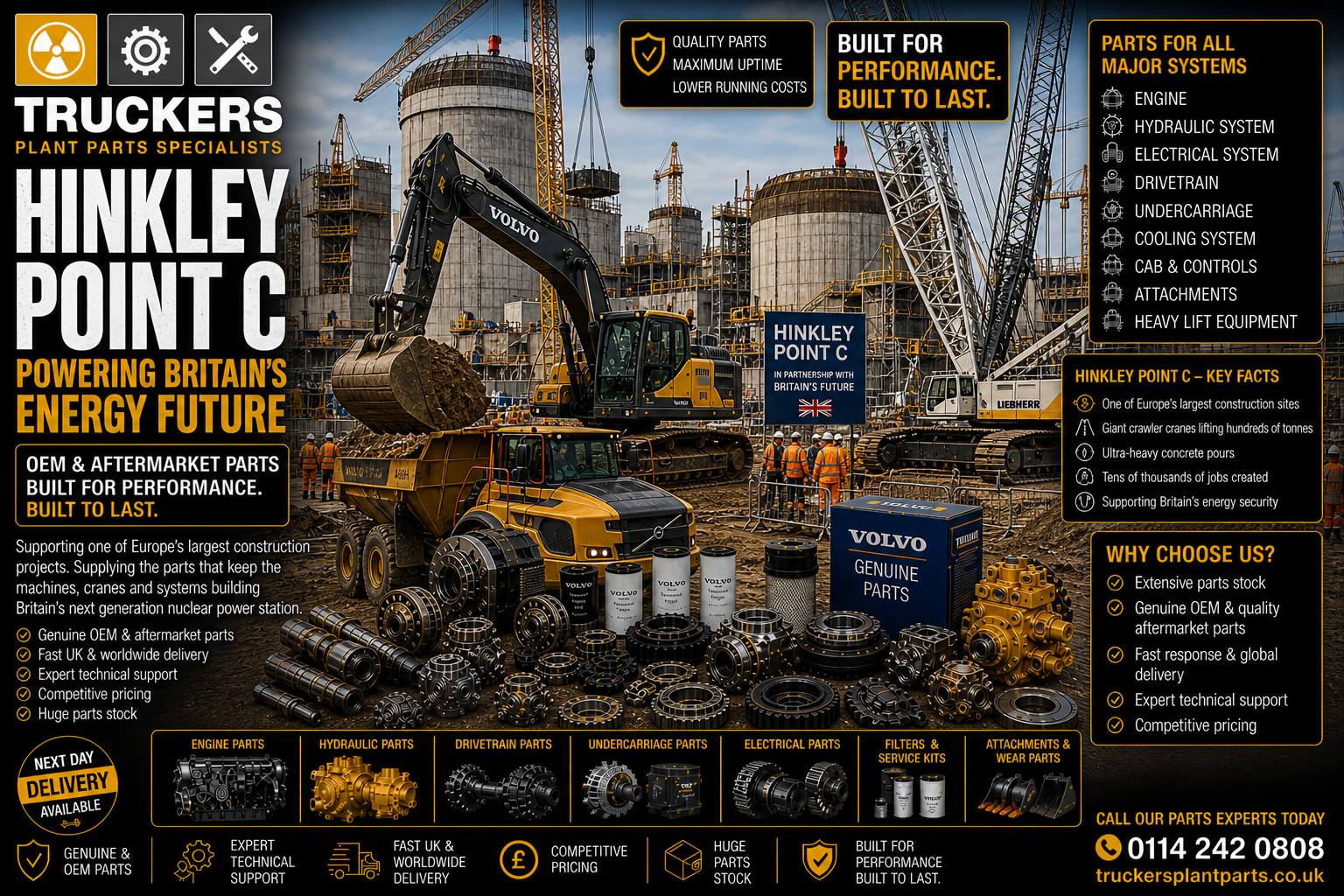
Hinkley Point C Construction Project and the Massive Heavy Plant Operation Powering Britain’s Nuclear Future
Hinkley Point C has become one of the most important and machinery-intensive infrastructure developments currently operating anywhere in Europe. Located on the Somerset coastline, the giant nuclear power station project represents far more than the construction of another energy facility. It is effectively a vast industrial engineering ecosystem involving enormous concrete operations, ultra-heavy lifting systems, specialist logistics networks, marine engineering works and one of the largest concentrations of heavy plant machinery ever assembled on a British construction site.
The scale of Hinkley Point C is difficult to fully appreciate without understanding the sheer volume of material, labour and engineering coordination required to build a modern nuclear power station. Massive excavation zones, giant reactor structures, marine cooling systems, turbine halls, logistics compounds, prefabrication areas and worker infrastructure now stretch across an enormous operational footprint where thousands of workers and heavy machines operate simultaneously every single day.
The project has fundamentally transformed the regional economy throughout Somerset and surrounding areas. Demand for engineers, crane operators, steel fabricators, concrete specialists, heavy haulage contractors, plant mechanics, welders, logistics coordinators and infrastructure suppliers has increased dramatically since construction accelerated. Hotels, accommodation providers, transport operators and local service industries have also experienced major economic impacts linked directly to the scale of the development.
From a heavy machinery perspective, Hinkley Point C has become one of the most technically demanding construction environments in the UK. The project requires extraordinary precision while simultaneously operating at massive industrial scale. Giant crawler cranes, specialist lifting systems, concrete batching plants, crawler excavators, articulated dump trucks, piling rigs and highly specialised engineering equipment work together within tightly controlled construction sequences that must meet strict nuclear-grade tolerances.
One of the defining visual features of Hinkley Point C is the dominance of giant crawler cranes across the site skyline. These machines are among the largest lifting systems operating in Europe and play critical roles throughout reactor construction and heavy structural assembly operations.
Crawler cranes operating at Hinkley Point C are capable of lifting hundreds and sometimes thousands of tonnes depending on configuration. These enormous machines are essential for positioning prefabricated reactor components, heavy steel structures, containment systems and specialised engineering modules that cannot be assembled through conventional lifting methods.
The logistics involved in transporting and assembling these crawler cranes alone are immense. Many crane components require heavy haulage convoys, specialist escort vehicles and carefully planned delivery schedules before assembly teams can begin erection operations on-site. Some cranes take weeks to fully assemble due to the scale of counterweights, boom sections and support systems involved.
Heavy lifting at Hinkley Point C goes far beyond traditional construction crane operations. Nuclear infrastructure requires extremely precise placement of enormous structural components where even small alignment deviations can create major engineering complications. Lift planning therefore involves advanced digital modelling, weather monitoring systems, structural analysis and highly specialised engineering oversight.
Ultra-heavy concrete pours represent another defining characteristic of the project. Nuclear-grade structures require enormous volumes of reinforced concrete installed under exceptionally strict quality assurance procedures. Some pours involve continuous operations lasting for extended periods while dedicated batching systems, pumping infrastructure and monitoring teams operate simultaneously to maintain consistency throughout the process.
Concrete operations at Hinkley Point C resemble large-scale industrial manufacturing more than standard building construction. Dedicated batching plants operate continuously to maintain supply while sophisticated testing systems monitor temperature, curing conditions, mix composition and structural integrity. Every stage of the process is subject to rigorous engineering control because nuclear infrastructure demands extremely high durability and performance standards.
The amount of concrete used throughout the project is staggering. Reactor buildings, turbine halls, cooling systems, marine structures, retaining walls and supporting infrastructure all require heavily reinforced nuclear-grade concrete capable of maintaining structural integrity over extremely long operational lifespans.
Excavators also play major roles throughout the site. Large crawler excavators perform bulk earthmoving, trenching, grading, drainage works and foundation preparation across multiple active construction zones. Machines equipped with hydraulic breakers, grabs and specialist attachments are frequently used in areas requiring precision demolition or material handling operations.
Articulated dump trucks operate continuously moving aggregates, spoil, concrete materials and construction supplies throughout the site. Given the sheer scale of material movement required, Hinkley Point C often resembles a mining or quarrying operation in terms of earthmoving intensity and logistics activity.
Large fleets of articulated haulers from manufacturers such as Volvo Construction Equipment, Caterpillar Inc., Bell Equipment and Komatsu Ltd. are particularly suited to large infrastructure projects where reliability and continuous uptime are critical.
Piling rigs and deep foundation systems form another major engineering layer throughout the development. Nuclear infrastructure requires exceptionally stable foundations capable of supporting huge structural loads while meeting stringent long-term safety requirements. Large rotary piling rigs therefore operate across multiple sections of the site installing deep foundation systems into varying ground conditions.
Marine engineering is another critical aspect of the project. Because Hinkley Point C sits on the Somerset coastline, extensive marine infrastructure and cooling water systems are required. This introduces additional engineering complexity involving coastal protection works, water intake systems, marine logistics operations and specialist heavy lifting near tidal environments.
Marine construction operations require specialised cranes, barges, dredging equipment and environmental management systems capable of operating safely in difficult coastal conditions. Coordination between marine works and onshore construction activity adds another major logistical challenge to the overall programme.
The logistics operation supporting Hinkley Point C is enormous in its own right. Massive quantities of steel, concrete, aggregates, prefabricated components and specialist engineering systems arrive continuously through highly coordinated supply chains. Temporary roads, storage compounds, prefabrication yards, worker facilities and fuel systems effectively create a temporary industrial city surrounding the construction zone.
Heavy haulage logistics are especially important because many reactor components and structural modules are too large for conventional transportation methods. Specialist transport planning, escort operations and route modifications are often required to move oversized components safely to the site.
Technology integration has become central to managing a project of this complexity. GPS-guided machinery, digital surveying systems, telematics platforms, drone monitoring and 3D modelling tools are heavily integrated into construction planning and operational management.
Digital twin technology and advanced modelling systems help engineers coordinate lifting operations, structural tolerances and construction sequencing with extremely high accuracy. On projects where tolerances are exceptionally strict, digital monitoring systems help reduce risk and improve construction precision.
Worker safety and operational control systems are also highly advanced throughout the site. Large infrastructure projects involving ultra-heavy lifting, marine operations and nuclear-grade engineering require continuous monitoring and tightly managed safety protocols.
Environmental management plays another major role at Hinkley Point C. Dust suppression systems, water treatment infrastructure, emissions monitoring and ecological mitigation measures are integrated throughout active construction zones. Sustainability and environmental compliance have become increasingly important within modern infrastructure developments of this scale.
The project has also generated enormous demand throughout the UK plant maintenance and replacement parts industries. Hydraulic systems, slew rings, undercarriage components, filters, cooling systems, bearings, pumps, transmission parts and structural wear components all experience significant operational stress under continuous heavy workloads.
For plant parts suppliers and engineering service providers, Hinkley Point C represents one of the largest long-term infrastructure opportunities currently active in Britain. Projects operating continuously for years create sustained demand for preventative maintenance, technical support and rapid-response replacement part supply chains.
Fuel management itself becomes a major operational challenge on a site of this size. Large machinery fleets consume huge quantities of diesel every day while generators, lifting systems and support infrastructure require constant energy supply. Dedicated fuelling compounds, maintenance workshops and logistics teams therefore operate continuously behind the scenes to maintain operational continuity.
The workforce concentration at Hinkley Point C is also extraordinary. Thousands of workers operate across engineering, logistics, construction, marine operations, maintenance and safety management roles simultaneously. Coordinating workforce movement, accommodation, access systems and operational scheduling adds another layer of complexity rarely seen outside the largest international megaprojects.
Beyond the construction phase itself, Hinkley Point C represents a major strategic investment in Britain’s long-term energy infrastructure. Nuclear generation remains a critical component of UK energy policy and projects like Hinkley Point C are intended to support national electricity demand while reducing long-term dependence on fossil fuels.
From an engineering perspective, the project has already become a landmark example of modern industrial-scale construction. Few sites in Europe currently combine such vast quantities of heavy machinery, specialist lifting systems, ultra-heavy concrete engineering and large-scale logistics coordination within a single operational environment.
Whether viewed from the perspective of nuclear engineering, heavy plant operations or civil infrastructure delivery, Hinkley Point C stands as one of the most ambitious and technically demanding construction projects ever undertaken in the United Kingdom.
Hinkley Point C Construction Project FAQ
1. What is Hinkley Point C?
Hinkley Point C is a major nuclear power station currently under construction in Somerset and one of Europe’s largest infrastructure and energy projects.
2. Why is Hinkley Point C considered such a major construction project?
The project combines nuclear engineering, marine infrastructure, ultra-heavy lifting operations, massive concrete pours and highly specialised construction systems on an enormous scale.
3. Why is the project famous in the construction industry?
It has become internationally recognised for giant crawler cranes, nuclear-grade engineering, complex logistics operations and some of the largest continuous concrete pours ever attempted in the UK.
4. What types of machinery are heavily used on-site?
Crawler cranes, crawler excavators, articulated dump trucks, batching plants, piling rigs, telehandlers, compaction systems and specialist lifting equipment are all heavily involved.
5. Why are crawler cranes so important at Hinkley Point C?
Crawler cranes are required to lift enormous reactor components, structural steel systems and prefabricated engineering modules weighing hundreds of tonnes.
6. How large are some of the cranes operating on the project?
Some crawler cranes used on major nuclear infrastructure projects can lift hundreds or even thousands of tonnes depending on configuration and boom setup.
7. Why are concrete pours such a major feature of the project?
Nuclear reactor buildings and supporting infrastructure require huge volumes of reinforced concrete installed under strict quality assurance standards.
8. What makes nuclear-grade concrete different?
Nuclear-grade concrete must meet extremely high durability, strength and safety requirements while maintaining structural integrity for very long operational lifespans.
9. Why are batching plants critical on-site?
Dedicated batching systems ensure continuous concrete supply while maintaining strict consistency and engineering standards during major pours.
10. What role do excavators play on the project?
Excavators are used for earthmoving, trenching, grading, drainage installation, material handling and foundation preparation throughout the site.
11. Why are articulated dump trucks used extensively?
Articulated haulers transport aggregates, spoil and construction materials continuously across the large operational footprint.
12. Which dump truck manufacturers are commonly associated with projects like this?
Major manufacturers include Volvo Construction Equipment, Caterpillar, Bell Equipment and Komatsu.
13. Why is heavy haulage logistics such a major challenge?
Many reactor and structural components are oversized and require specialist transport planning, escort vehicles and coordinated delivery systems.
14. What role does marine engineering play at Hinkley Point C?
Cooling systems and coastal infrastructure require major marine engineering works including water intake systems and coastal protection operations.
15. Why are piling rigs important on nuclear projects?
Deep foundation systems are essential for supporting massive structural loads while maintaining long-term stability and safety.
16. How many workers operate on the site?
The workforce numbers in the thousands across engineering, logistics, construction, maintenance and operational support roles.
17. How has the project impacted Somerset’s economy?
The project has created major demand for accommodation, transport, engineering services, plant hire and local supply chains.
18. What types of replacement parts experience heavy demand?
Hydraulic systems, filters, bearings, undercarriage parts, pumps, slew rings, cooling systems and drivetrain components are all heavily used.
19. Why is preventative maintenance so important?
Machine downtime on projects of this scale can delay critical engineering sequences and increase operational costs significantly.
20. How advanced is the technology used on the project?
Digital surveying, GPS machine control, telematics systems, drone monitoring and 3D modelling are heavily integrated into operations.
21. What is digital twin technology?
Digital twin systems create highly detailed virtual models used to coordinate engineering operations and monitor construction progress.
22. Why is safety management so strict on-site?
The combination of nuclear engineering, ultra-heavy lifting and marine operations requires extremely high safety standards.
23. What role do telehandlers play on large infrastructure projects?
Telehandlers move materials, support logistics operations and assist contractors working across multiple construction zones.
24. Why is fuel management such a major operation?
Large fleets of heavy machinery consume enormous amounts of fuel every day and require dedicated fuelling infrastructure.
25. How complex are logistics operations at Hinkley Point C?
The project operates like a large industrial city involving constant movement of workers, materials, machinery and oversized engineering components.
26. What role does steel fabrication play?
Huge quantities of structural steel and prefabricated systems are required throughout reactor and infrastructure construction.
27. Why are marine conditions challenging for construction?
Tidal environments, coastal exposure and environmental regulations create additional engineering and operational complexity.
28. How long is construction expected to continue?
Major nuclear infrastructure projects often require many years of phased construction before commissioning and operational readiness.
29. Why is Hinkley Point C strategically important for the UK?
The project supports long-term energy security and low-carbon electricity generation for millions of homes.
30. Why is Hinkley Point C considered one of Europe’s largest construction sites?
The combination of heavy machinery, workforce scale, engineering complexity and continuous infrastructure operations places it among the largest active construction environments in Europe.