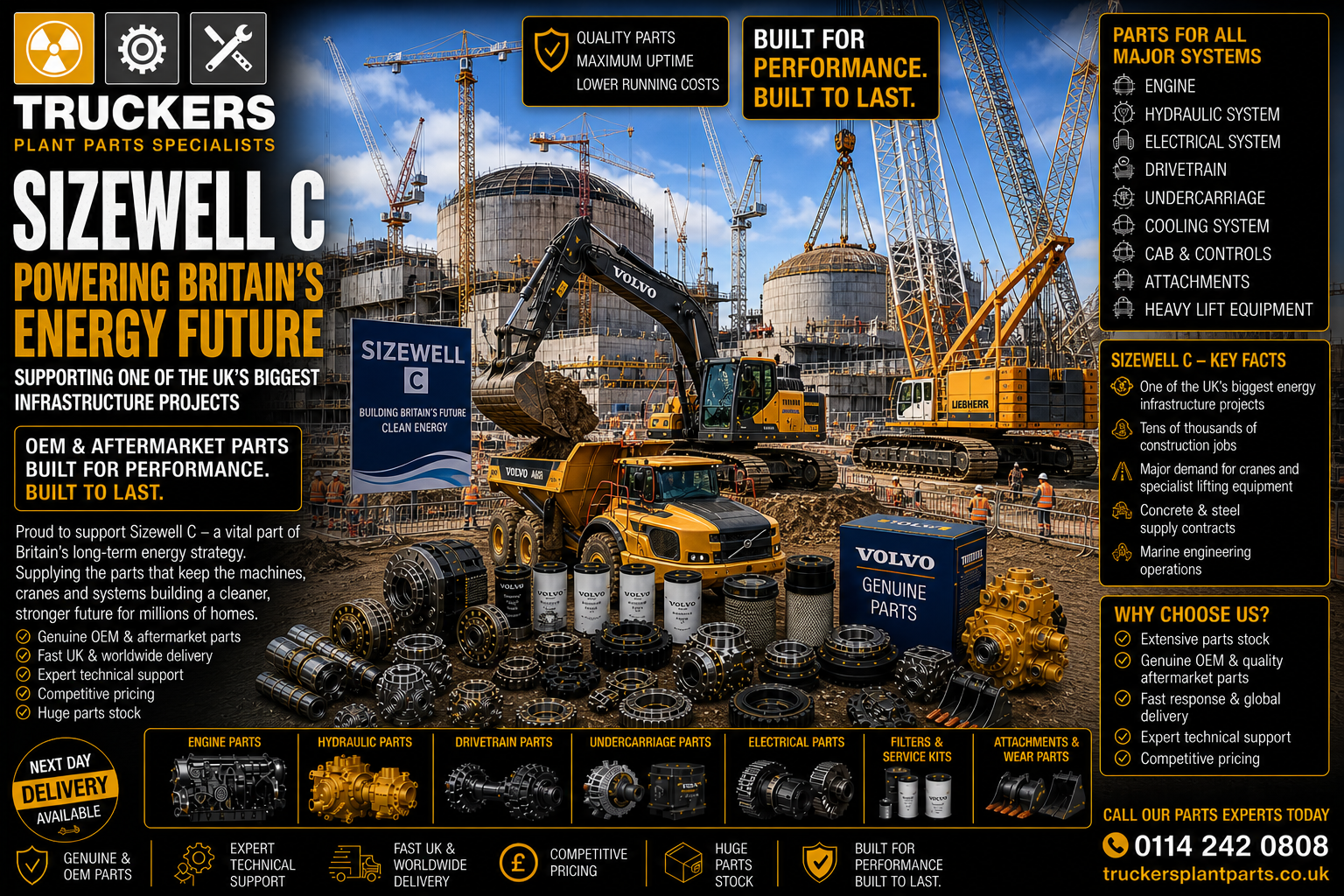
Sizewell C Construction Project and the Massive Heavy Engineering Operation Behind Britain’s Next Nuclear Power Station
Sizewell C is rapidly becoming one of the most strategically important infrastructure developments in the United Kingdom. Located on the Suffolk coastline, the nuclear megaproject is expected to play a central role in Britain’s long-term energy security strategy while also creating one of the largest concentrations of heavy construction activity, engineering labour and specialist lifting operations currently planned anywhere in Europe.
The project goes far beyond the construction of a traditional power station. Sizewell C represents a vast industrial engineering ecosystem involving marine infrastructure, nuclear-grade concrete systems, ultra-heavy lifting operations, massive logistics coordination and highly specialised construction methods operating simultaneously across an enormous coastal site. Once construction reaches full intensity, the development is expected to consume extraordinary volumes of steel, aggregates, concrete, fuel, engineering services and heavy plant machinery.
The scale of Sizewell C is expected to transform the surrounding regional economy in much the same way other major nuclear projects have reshaped local construction industries across Britain. Tens of thousands of jobs are anticipated throughout the supply chain including engineers, crane operators, plant mechanics, marine specialists, steel fabricators, logistics coordinators, welders, civil engineering contractors and heavy haulage operators.
One of the defining features of the Sizewell C project will be the sheer scale of heavy lifting operations required throughout the build programme. Nuclear power station construction demands extremely large structural components, prefabricated engineering modules and reinforced systems that cannot be assembled using conventional construction techniques. This creates enormous demand for crawler cranes, specialist lifting systems and ultra-heavy transport infrastructure.
Large crawler cranes capable of lifting hundreds or even thousands of tonnes are expected to dominate major sections of the construction site. These machines will be essential for positioning reactor components, steel structures, cooling systems and large prefabricated assemblies with exceptional precision.
Crawler cranes operating on nuclear megaprojects are among the largest land-based lifting systems in the world. Some require weeks of assembly involving heavy haulage convoys, support cranes, ballast systems and highly specialised erection crews before they become operational. Their presence alone demonstrates the immense engineering scale involved in projects like Sizewell C.
Heavy lifting operations at nuclear facilities require far more than simple crane capacity. Precision is critical because nuclear infrastructure operates under exceptionally strict engineering tolerances. Digital modelling systems, structural analysis, wind monitoring and advanced lift planning technologies are therefore heavily integrated into major lifting operations.
Concrete engineering represents another major operational component of the project. Nuclear reactor buildings require huge quantities of reinforced nuclear-grade concrete capable of maintaining structural performance for extremely long operational lifespans. Massive continuous concrete pours, dedicated batching systems and sophisticated quality control procedures are therefore expected to operate throughout construction.
Concrete batching plants at projects like Sizewell C effectively function as industrial production facilities. Continuous testing, temperature monitoring, mix verification and structural compliance checks form part of every major concrete operation. Any variation outside strict engineering specifications can create major complications within nuclear-grade structures.
The amount of concrete required throughout the development is expected to be enormous. Reactor buildings, turbine halls, cooling systems, containment structures, marine infrastructure, drainage systems and supporting foundations all consume vast quantities of reinforced material. Dedicated logistics systems are therefore required to maintain uninterrupted concrete supply during critical construction phases.
Steel supply chains will also become one of the largest operational components supporting the project. Structural steel, prefabricated systems, reinforcement cages, cooling systems and mechanical infrastructure all require extensive fabrication and transport operations involving specialist engineering contractors throughout the UK and beyond.
Marine engineering forms another defining element of Sizewell C due to its coastal location in Suffolk. Cooling water systems, shoreline protection, marine logistics infrastructure and environmental management systems all require specialist marine construction operations operating within highly regulated environmental conditions.
Marine engineering activities may involve dredging systems, heavy marine cranes, barges, pumping stations, coastal reinforcement works and specialist offshore support equipment. Coordinating marine infrastructure alongside land-based nuclear construction adds another major layer of complexity to the overall programme.
Excavators will play major roles throughout the site during enabling works and civil engineering operations. Large crawler excavators will be required for earthmoving, trenching, drainage installation, foundation preparation and utility works across multiple active construction zones. Machines equipped with hydraulic breakers, grabs and specialist attachments may also support demolition and preparation phases where required.
Articulated dump trucks are expected to become essential throughout the project due to the enormous quantities of aggregates, spoil and structural fill materials moving continuously across the site. Large articulated haulers from manufacturers such as Volvo Construction Equipment, Caterpillar Inc., Bell Equipment and Komatsu Ltd. are particularly suited to large infrastructure projects operating in difficult terrain and demanding site conditions.
At peak construction intensity, the operational environment at Sizewell C is likely to resemble a combination of a giant industrial complex, marine engineering facility and mining-style earthmoving operation simultaneously. Temporary haul roads, maintenance compounds, storage areas, worker accommodation facilities and logistics depots effectively create a temporary industrial city surrounding the main construction zones.
Piling rigs and geotechnical engineering systems will also play major roles throughout the project. Nuclear infrastructure requires exceptionally stable deep foundations capable of supporting massive structural loads while maintaining long-term safety and operational reliability. Rotary piling rigs, diaphragm wall systems and ground stabilisation equipment are therefore expected to operate extensively during the civils phase.
Heavy haulage logistics will become critically important due to the sheer size and weight of many nuclear components and structural systems. Oversized loads often require specialist route planning, escort vehicles, temporary road modifications and carefully coordinated delivery schedules to transport major assemblies safely to site.
The project will also create significant long-term demand for aggregates and raw materials throughout Britain’s construction supply chain. Quarries, cement producers, steel manufacturers, transport firms and heavy engineering suppliers are all likely to benefit from the enormous material demand generated by a project of this magnitude.
Technology integration has become central to modern nuclear infrastructure construction. GPS-guided machinery, telematics systems, drone surveying, 3D modelling and digital twin engineering platforms are now essential tools for coordinating highly complex construction sequences with extremely tight tolerances.
Digital monitoring systems help contractors manage fuel consumption, machine productivity, maintenance scheduling and operational safety across large machinery fleets. On projects where downtime can delay major engineering operations, predictive maintenance and live telematics monitoring become increasingly valuable.
Environmental management also plays a central role throughout nuclear construction projects. Dust suppression systems, emissions monitoring, ecological protection measures, water treatment infrastructure and sustainable construction practices are heavily integrated into project planning and operational procedures.
Fuel management itself becomes a huge logistical challenge. Large crawler cranes, excavators, generators, dump trucks and support systems consume vast quantities of fuel every day during active construction phases. Dedicated fuelling systems and maintenance infrastructure are therefore essential to keeping operations running continuously.
The demand for replacement plant parts and maintenance services on projects like Sizewell C is also substantial. Hydraulic pumps, filters, slew rings, bearings, undercarriage systems, cooling components, drivetrain parts and heavy wear components all experience intense operational stress under continuous heavy workloads.
For plant parts suppliers, crane service companies and engineering support providers, Sizewell C represents one of the largest long-term opportunities currently developing within the UK construction and infrastructure market.
Beyond the machinery and engineering itself, the project carries major national significance because it forms part of Britain’s broader long-term energy transition strategy. Nuclear infrastructure remains a key component of UK electricity generation policy and projects like Sizewell C are intended to provide reliable low-carbon power generation capacity for decades into the future.
From a heavy engineering perspective, Sizewell C represents one of the most ambitious infrastructure programmes currently planned in Britain. Few developments combine such large-scale marine works, nuclear-grade engineering, ultra-heavy lifting operations and industrial construction logistics within a single project environment.
Whether viewed as an energy project, a construction megaproject or a heavy machinery operation, Sizewell C stands as one of the clearest examples of the extraordinary engineering scale required to build the next generation of national infrastructure.
FAQ: Sizewell C Construction Project
1. What is Sizewell C?
Sizewell C is a proposed large-scale nuclear power station development located in Suffolk and designed to support Britain’s long-term electricity generation and energy security.
2. Why is Sizewell C considered strategically important?
The project is expected to provide low-carbon electricity for millions of homes while strengthening the UK’s long-term energy infrastructure.
3. Why is the project such a major construction undertaking?
The scale of nuclear infrastructure, marine works, heavy lifting systems and specialist engineering involved makes it one of Europe’s largest planned infrastructure projects.
4. What types of machinery are expected to be heavily used?
Crawler cranes, crawler excavators, articulated dump trucks, batching plants, piling rigs, marine engineering equipment and specialist lifting systems are all expected to play major roles.
5. Why are crawler cranes so important on nuclear projects?
Crawler cranes are required to lift extremely heavy reactor components, structural steel systems and prefabricated engineering modules with very high precision.
6. How large are some crawler cranes used on projects like this?
Some cranes used on nuclear megaprojects can lift hundreds or thousands of tonnes depending on configuration and lifting requirements.
7. Why does nuclear construction require so much concrete?
Reactor buildings, containment structures and supporting infrastructure require massive reinforced concrete systems capable of maintaining long-term structural integrity.
8. What makes nuclear-grade concrete different from standard concrete?
Nuclear-grade concrete must meet extremely strict engineering standards for strength, durability, consistency and long-term performance.
9. Why are batching plants essential on-site?
Dedicated batching systems maintain continuous supply and strict quality control during major concrete operations.
10. What role do excavators play throughout the project?
Excavators are used for earthmoving, trenching, utility installation, grading, drainage works and foundation preparation.
11. Why are articulated dump trucks heavily used?
Articulated haulers transport aggregates, spoil and structural materials continuously around the site.
12. Which manufacturers commonly supply dump trucks for infrastructure projects?
Major manufacturers include Volvo Construction Equipment, Caterpillar, Bell Equipment and Komatsu.
13. Why are marine engineering works necessary at Sizewell C?
Cooling systems and coastal infrastructure require specialist marine construction and environmental engineering operations.
14. What types of marine equipment could be involved?
Marine cranes, barges, dredging systems, pumping stations and coastal reinforcement equipment may all be required.
15. Why are piling rigs important?
Deep foundations are essential for supporting massive nuclear structures while ensuring long-term stability and safety.
16. What role does steel fabrication play in the project?
Huge quantities of structural steel, reinforcement systems and prefabricated components are required throughout construction.
17. Why is heavy haulage logistics such a major challenge?
Many nuclear components are oversized and require specialist transportation planning and escort operations.
18. How many jobs could the project support?
The project is expected to support tens of thousands of jobs directly and indirectly throughout construction and supply chains.
19. How does the project impact local economies?
Large infrastructure developments create major demand for accommodation, logistics, engineering services and regional supply businesses.
20. What types of replacement parts are heavily used on megaprojects?
Hydraulic systems, filters, bearings, slew rings, cooling systems, pumps and undercarriage components experience heavy demand.
21. Why is preventative maintenance so important?
Equipment downtime on large infrastructure projects can delay major engineering operations and significantly increase costs.
22. What role does digital technology play during construction?
Digital modelling, GPS machine control, telematics systems and drone surveying improve coordination and operational efficiency.
23. What is digital twin technology?
Digital twin systems create detailed virtual models used to coordinate construction operations and monitor engineering performance.
24. Why is environmental management important on nuclear construction projects?
Coastal infrastructure projects must meet strict environmental standards relating to emissions, ecology, water management and sustainability.
25. Why is fuel management such a major operation?
Large machinery fleets consume enormous quantities of fuel every day during active construction phases.
26. How complex are logistics operations on projects like Sizewell C?
Projects of this size involve continuous movement of workers, machinery, steel, aggregates and oversized engineering systems.
27. Why is Sizewell C important for the UK construction industry?
The project creates major long-term demand for plant hire, engineering services, aggregates, steel fabrication and heavy machinery support.
28. How does Sizewell C compare to Hinkley Point C?
Both are major nuclear infrastructure projects involving ultra-heavy lifting, nuclear-grade engineering and large-scale construction logistics.
29. Why are marine conditions challenging for construction operations?
Coastal weather, tidal environments and environmental regulations create additional engineering complexity and operational risks.
30. Why is Sizewell C considered one of Britain’s biggest future infrastructure projects?
The combination of nuclear engineering, marine infrastructure, heavy construction operations and national energy significance places it among the UK’s most ambitious planned developments.