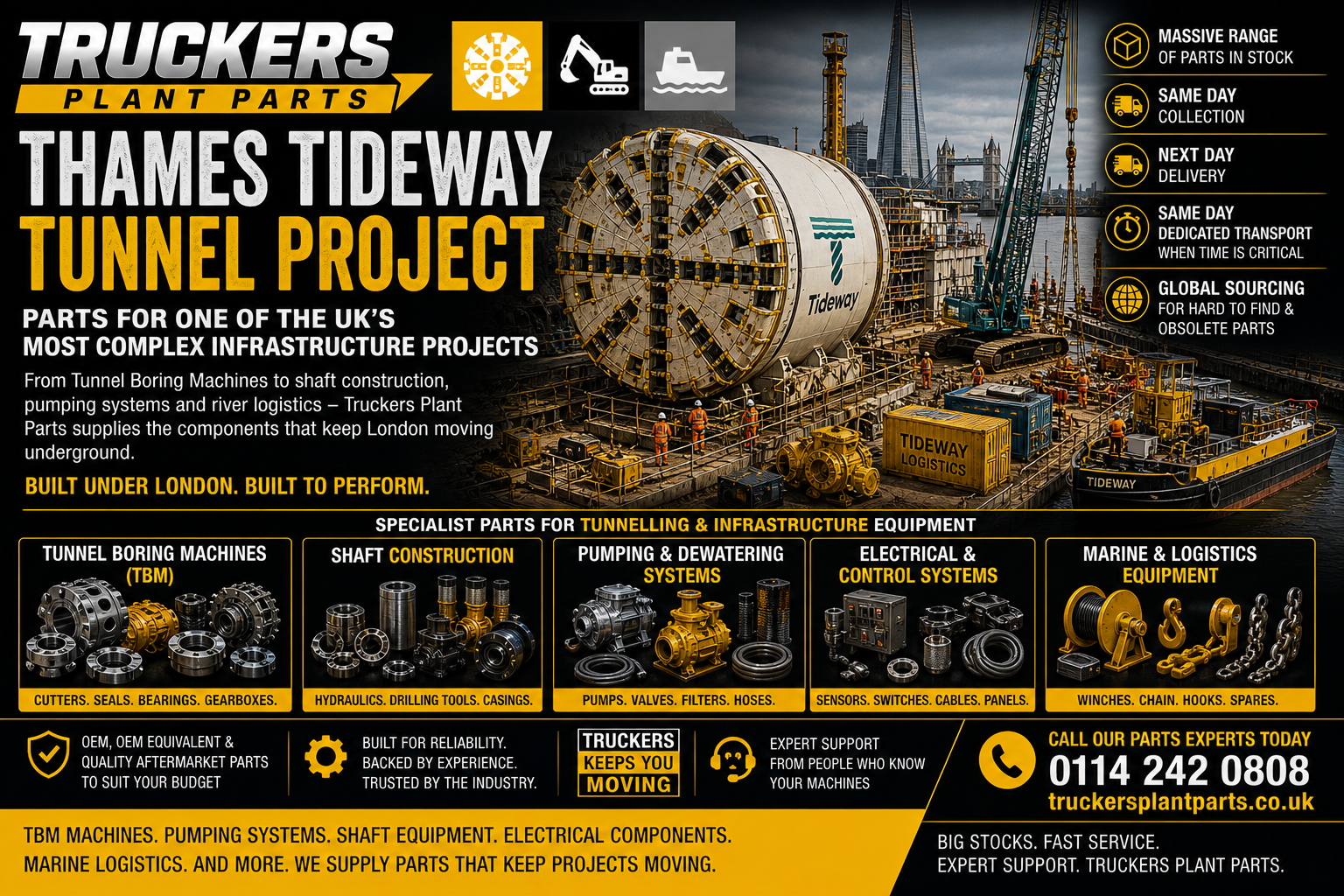
Thames Tideway Tunnel Construction Project and the Massive Underground Engineering Operation Beneath London
Thames Tideway Tunnel has become one of the most technically complex and ambitious tunnelling programmes ever undertaken in Britain. Commonly referred to as London’s “super sewer,” the project was designed to modernise the capital’s ageing Victorian drainage system while dramatically reducing sewage overflow into the River Thames. Stretching approximately twenty-five kilometres beneath central London, the giant underground tunnel network represents one of Europe’s largest urban tunnelling and infrastructure engineering operations.
The sheer complexity of the Thames Tideway Tunnel project comes not only from the scale of excavation involved but from the extraordinary engineering challenge of constructing huge tunnels beneath one of the world’s busiest and most densely built cities. Beneath London lies an intricate maze of underground railways, utility networks, building foundations, road systems, river crossings and historic infrastructure that required exceptional precision throughout every phase of construction.
Unlike open construction environments, the Thames Tideway Tunnel demanded continuous underground engineering beneath live transport systems, densely populated areas and highly sensitive infrastructure corridors. Every section of tunnelling required advanced surveying, geotechnical monitoring, environmental management and tightly controlled excavation processes to maintain safety and operational stability across the city above.
The project effectively created a vast underground industrial operation beneath London involving giant tunnel boring machines, deep shaft construction systems, crawler cranes, marine logistics operations, spoil handling systems, dewatering infrastructure and specialist tunnelling contractors operating simultaneously across multiple riverfront construction zones.
One of the defining engineering features of the project was the use of giant tunnel boring machines. These enormous machines function as underground excavation factories capable of cutting through clay, chalk and varying geological conditions while simultaneously installing reinforced tunnel linings behind the excavation face.
Tunnel boring machines used on the Thames Tideway Tunnel were among the largest and most advanced ever deployed in the UK. Once assembled, some extended more than one hundred metres in length and weighed thousands of tonnes. Their rotating cutter heads excavated material continuously while conveyor systems removed spoil and hydraulic systems installed precast concrete tunnel segments with exceptional precision.
The level of accuracy required throughout tunnelling operations was extraordinary. Even small alignment deviations beneath central London could have major implications when operating near Underground lines, foundations, utilities and existing sewer infrastructure. Advanced laser guidance systems, digital surveying technologies and geotechnical monitoring platforms were therefore integrated continuously throughout tunnel excavation.
Deep shaft construction formed another major engineering challenge across the project. Large vertical shafts were required at multiple locations to provide access for tunnel boring machines, ventilation systems, spoil removal operations and future sewer connections. Constructing these shafts in dense urban environments demanded highly specialised excavation techniques and extensive temporary support systems.
Some shafts extended many metres below ground level requiring diaphragm wall systems, piling rigs, dewatering systems and large crawler cranes operating within extremely restricted city centre environments. Excavating deep shafts safely beneath London’s complex geology required continuous groundwater management and highly controlled engineering sequences.
Crawler cranes dominated many surface construction zones along the Thames riverfront. These cranes lifted tunnel components, shaft infrastructure, reinforcement cages, spoil handling systems and marine engineering equipment throughout construction operations. Some lifting operations involved extremely heavy prefabricated tunnel sections and specialised tunnelling support systems requiring detailed engineering planning.
Marine logistics became one of the project’s most innovative and strategically important operational systems. Rather than relying entirely on road transport, large quantities of excavated spoil, aggregates and construction materials were moved along the River Thames using barges and marine transport systems.
This approach significantly reduced lorry movements across central London while improving logistical efficiency throughout the project. River transport operations required specialist marine cranes, loading systems, barges and temporary jetty infrastructure operating continuously across multiple riverside construction compounds.
Spoil removal alone represented a huge logistical operation. Millions of tonnes of excavated material needed to be transported safely and efficiently away from tunnelling zones without overwhelming London’s already congested road network. Using the Thames itself as a logistics corridor became one of the defining operational features of the programme.
Dewatering and pumping systems also played critical roles throughout the project. Underground tunnelling beneath London involves constant management of groundwater pressure and water ingress. Large pumping stations, drainage systems and water treatment infrastructure therefore operated continuously throughout shaft and tunnel construction phases.
Excavators and earthmoving machinery were heavily used throughout enabling works, shaft construction and material handling operations. Large crawler excavators equipped with hydraulic grabs, breakers and specialist attachments operated within confined urban construction environments requiring high levels of precision and coordination.
Articulated dump trucks and material handling systems transported spoil, aggregates and structural materials around active compounds and logistics areas. Heavy machinery operating in central London required particularly careful logistical coordination due to restricted access routes and dense surrounding infrastructure.
Piling rigs and geotechnical engineering systems were also essential throughout the project. Deep foundations, shaft support systems and riverfront infrastructure required highly stable structural engineering solutions capable of operating safely beneath complex urban environments.
Concrete engineering represented another enormous operational component. Tunnel linings, shafts, pumping systems, riverfront structures and operational infrastructure all required large quantities of reinforced concrete. Dedicated batching systems and tightly coordinated delivery schedules were essential to maintaining continuous construction progress.
Tunnel lining segments themselves required highly specialised manufacturing and logistics systems. Precast reinforced concrete sections had to be produced to extremely precise tolerances before transportation and installation underground. Any deviation in quality or geometry could affect long-term tunnel performance and structural integrity.
Heavy haulage logistics also became increasingly important because tunnel boring machine components, cranes, pumping systems and structural assemblies required specialist transportation planning through restricted urban routes.
Temporary construction compounds effectively transformed sections of London’s riverfront into major industrial engineering zones. Maintenance workshops, fuel systems, spoil processing areas, storage compounds and marine loading facilities operated continuously throughout the programme.
Digital engineering technology was heavily integrated throughout the Thames Tideway Tunnel project. GPS systems, laser guidance technologies, digital modelling, drone surveying and telematics platforms all supported operational coordination and engineering precision.
Tunnel boring operations in particular relied heavily on real-time digital monitoring systems tracking cutter head performance, tunnel alignment, structural pressures and ground movement continuously throughout excavation.
Environmental management was another major operational priority because the project operated throughout densely populated urban environments and sensitive river ecosystems. Dust suppression systems, emissions controls, water treatment operations and noise mitigation measures were all heavily integrated into project planning.
The project also generated major demand throughout the UK heavy engineering, tunnelling, aggregates and plant maintenance industries. Specialised contractors, machinery suppliers, steel fabricators, marine operators and replacement parts companies all played significant roles throughout the programme.
Replacement parts demand on tunnelling projects is especially high because tunnel boring machines and associated support systems operate under extremely demanding conditions. Hydraulic systems, bearings, pumps, conveyor systems, cutting tools, seals and structural wear components all experience significant operational stress during continuous underground excavation.
For engineering service providers and plant support companies, the Thames Tideway Tunnel represented one of the largest specialist tunnelling opportunities ever undertaken in Britain.
Beyond the engineering itself, the project carries enormous environmental significance for London. Victorian sewer infrastructure built during the nineteenth century was no longer capable of handling modern population levels and rainfall events effectively. The Thames Tideway Tunnel therefore represents a major long-term investment in public infrastructure, environmental protection and urban resilience.
From a heavy engineering perspective, the project demonstrated the extraordinary sophistication of modern tunnelling technology and urban infrastructure delivery. Few construction programmes in Europe combine such large-scale underground excavation, marine logistics, geotechnical engineering and live city operations within a single coordinated project.
Whether viewed as a sewer upgrade, an environmental programme or a tunnelling megaproject, the Thames Tideway Tunnel stands as one of the greatest engineering achievements in modern British infrastructure history.
FAQ: Thames Tideway Tunnel Construction Project
1. What is the Thames Tideway Tunnel?
The Thames Tideway Tunnel is a major sewer infrastructure project designed to modernise London’s ageing Victorian drainage system.
2. Why is it often called London’s super sewer?
The project creates a huge underground tunnel system capable of reducing sewage overflow into the River Thames.
3. How large is the tunnel network?
The tunnel system extends for approximately twenty-five kilometres beneath central London.
4. Why is the project considered technically complex?
The tunnels pass beneath one of the world’s densest urban environments filled with Underground lines, utilities, foundations and historic infrastructure.
5. What machinery played major roles during construction?
Tunnel boring machines, crawler cranes, shaft sinking systems, excavators, pumps and marine logistics equipment were all heavily involved.
6. What are tunnel boring machines?
Tunnel boring machines are giant underground excavation systems that cut tunnels while simultaneously installing structural tunnel linings.
7. How large are some tunnel boring machines?
Some machines extend over one hundred metres in length and weigh thousands of tonnes once fully assembled.
8. Why is tunnel alignment precision so important?
Even small deviations underground can affect surrounding infrastructure and long-term tunnel performance.
9. What role did deep shafts play during construction?
Deep shafts provided access for tunnelling operations, spoil removal, ventilation systems and future sewer connections.
10. Why are deep shaft excavations difficult in London?
Dense urban infrastructure, groundwater management and restricted construction environments create major engineering challenges.
11. What role did crawler cranes play on the project?
Crawler cranes lifted tunnel components, reinforcement systems, shaft structures and marine engineering equipment.
12. Why was marine logistics so important?
Using the River Thames for transport reduced lorry movements and improved logistical efficiency across London.
13. What materials were transported by river?
Excavated spoil, aggregates, tunnel segments and construction materials were commonly moved using barges.
14. Why was spoil removal such a major operation?
Millions of tonnes of excavated material needed to be removed efficiently from central London construction zones.
15. What role did pumping systems play during construction?
Pumps and dewatering systems controlled groundwater and water ingress during tunnelling and shaft excavation.
16. Why is groundwater management important during tunnelling?
Poor groundwater control can destabilise excavation zones and surrounding infrastructure.
17. What role did excavators play during construction?
Excavators handled shaft excavation, material movement, grading and support works throughout multiple construction compounds.
18. Why are piling rigs important during underground infrastructure projects?
Piling systems provide stable structural support for shafts, retaining walls and riverfront engineering systems.
19. Why is concrete engineering so important on tunnelling projects?
Tunnel linings, shafts and support infrastructure all require reinforced concrete meeting strict engineering standards.
20. What are tunnel lining segments?
Tunnel lining segments are precast reinforced concrete sections installed behind tunnel boring machines to form the finished tunnel structure.
21. Why are tunnel lining tolerances so strict?
Precise geometry is essential for long-term tunnel stability and watertight performance.
22. What role did digital technology play throughout the project?
Laser guidance systems, telematics, drone surveying and digital modelling all supported engineering precision and operational coordination.
23. What is telematics in construction machinery?
Telematics systems monitor machinery performance, maintenance requirements and operational productivity in real time.
24. Why is preventative maintenance especially important on tunnelling projects?
Tunnel boring systems operate continuously under extreme loads and downtime can cause major delays and costs.
25. What replacement parts experience heavy demand during tunnelling operations?
Bearings, hydraulic systems, pumps, seals, conveyor components and cutting tools all experience significant wear.
26. Why are environmental controls important on urban infrastructure projects?
Dust, emissions, water quality and noise must all be carefully managed in densely populated environments.
27. How did the project benefit London environmentally?
The tunnel system dramatically reduces sewage discharge into the River Thames during heavy rainfall events.
28. Why is the project important for future infrastructure planning?
The project modernises essential infrastructure originally built during the Victorian era for a much smaller population.
29. How did the project impact the UK construction industry?
It created major demand for tunnelling specialists, marine operators, heavy engineering contractors and plant support industries.
30. Why is the Thames Tideway Tunnel considered one of Britain’s greatest modern engineering achievements?
The combination of urban tunnelling, marine logistics, environmental infrastructure and underground engineering complexity places it among the UK’s most ambitious infrastructure projects ever delivered.