Call Now: 0114 242 0808
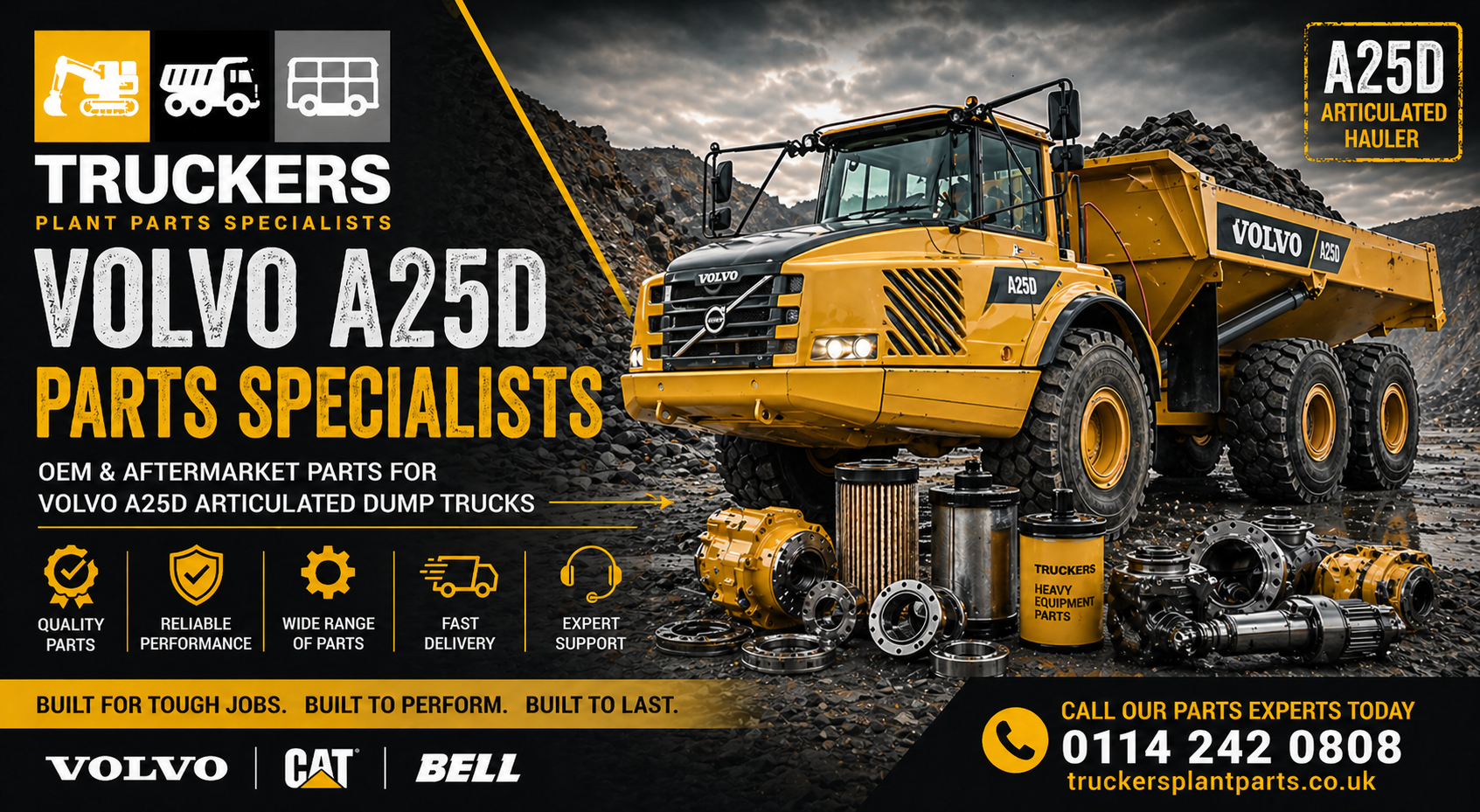
Volvo A25D Articulated Dump Truck: The Legendary Volvo ADT Built For Quarrying, Earthmoving & Severe Duty Haulage
The Volvo A25D articulated dump truck represents one of the most respected and dependable articulated haulers ever produced within the heavy equipment industry. Built during a period where Volvo Construction Equipment was rapidly strengthening its reputation for durable driveline engineering, operator comfort, fuel-efficient hauling systems, and reliable off-road performance, the A25D became a hugely popular machine across quarrying, aggregates, earthmoving, mining support, construction, forestry, landfill operations, and heavy civil engineering projects worldwide.
For many operators and fleet owners, the Volvo A25D sits within what many consider the golden era of Volvo articulated hauler development. It combines the proven mechanical strength and rugged simplicity of earlier Volvo articulated dump trucks with more advanced driveline systems, improved hydraulics, stronger engines, better operator comfort, and refined hauling performance. The result was a machine capable of delivering exceptional productivity and reliability in severe-duty hauling environments while remaining relatively straightforward to maintain compared with many newer electronically intensive machines.
The A25D belongs to Volvo’s highly respected articulated hauler bloodline which stretches back decades to the original Volvo BM articulated dump trucks that helped revolutionise off-road hauling globally. Volvo was one of the pioneers of articulated hauler technology, developing machines capable of maintaining traction, stability, and productivity in terrain conditions where rigid trucks struggled badly. That heritage remains deeply embedded within the A25D design philosophy.
The Volvo A25D was engineered specifically for difficult off-road environments where traction, driveline durability, articulation performance, and load stability matter more than simply raw top speed. Unlike highway trucks or rigid dump trucks that require smoother haul roads and more controlled operating environments, articulated haulers such as the A25D are designed to work across mud, rock, steep gradients, rough quarry haul roads, unstable terrain, wet ground conditions, forestry tracks, and challenging earthmoving environments.
This versatility is one of the main reasons articulated haulers became so dominant within quarrying and earthmoving industries.
At the heart of the Volvo A25D is Volvo’s highly respected D10B diesel engine platform producing approximately 305–310 horsepower depending on specification and market configuration. The engine was designed around strong low-end torque delivery, hauling durability, fuel efficiency, and sustained pulling power rather than high-revving horsepower figures. This is critical within articulated dump truck applications because these machines spend much of their working lives hauling heavy payloads uphill, through soft ground, over uneven terrain, and across constantly changing site conditions.
The D10 engine developed a reputation for being exceptionally durable when maintained correctly. Operators and plant engineers often praise Volvo engines from this era for their longevity, strong torque characteristics, cold-weather reliability, and ability to tolerate demanding production environments for extremely high operating hours.
The A25D typically carries payloads approaching 24 tonnes with heaped capacities around 15 cubic metres depending on body specification and material density. This payload category places the machine in one of the most versatile articulated hauler segments because it is large enough for serious production hauling while still remaining manoeuvrable and transportable enough for a broad range of projects.
In quarry environments, the A25D is commonly paired with crawler excavators such as Volvo EC360, EC460, EC480, or larger production excavators loading blasted rock and aggregate. In earthmoving environments, the machine supports large excavation projects, road building, embankment construction, dam work, and bulk site preparation. In landfill and recycling environments, the machine’s off-road capability allows operators to move material across difficult ground conditions efficiently where conventional trucks would quickly lose traction.
One of the defining strengths of the Volvo A25D is its articulated chassis system combined with Volvo’s advanced driveline and suspension engineering. The articulation joint allows the tractor and trailer sections to move independently while maintaining excellent traction and stability across rough terrain. Volvo engineered these systems specifically to maintain ground contact across uneven surfaces, helping maximise traction while reducing stress on the chassis and driveline components.
This articulation system became one of Volvo’s defining engineering advantages.
Unlike rigid chassis dump trucks that can become unstable or lose traction across uneven terrain, articulated haulers such as the A25D remain highly capable in rough off-road environments. This allows operators to maintain productivity in conditions where other hauling equipment would struggle significantly.
The driveline itself reflects Volvo’s strong engineering focus during this period. Heavy-duty axles, planetary hub reductions, automatic differential locking systems, and all-wheel drive capability all contribute to the machine’s excellent off-road performance. Volvo designed these systems specifically for severe-duty hauling applications involving mud, rock, gradients, loose material, and continuously changing terrain conditions.
Traction remains one of the biggest advantages of articulated dump trucks generally, and the A25D demonstrates this exceptionally well.
The machine’s transmission system was engineered around smooth power delivery and efficient hauling performance. Articulated haulers experience constant loading variation depending on terrain, payload weight, haul road conditions, and weather, so driveline smoothness and torque management become critically important for both operator comfort and component longevity.
The A25D also introduced improvements in operator environment and cab refinement compared with much older articulated haulers. Volvo increasingly focused on operator productivity, comfort, visibility, and fatigue reduction during this generation of machine development. Operators often spend extremely long shifts inside articulated haulers moving material continuously between loading and dumping locations, so comfort and visibility directly affect productivity and safety.
The Volvo Care Cab philosophy became increasingly visible during this era of Volvo machine design.
Inside the A25D cab, operators benefit from improved visibility, ergonomic control placement, reduced noise levels, suspension seating, effective climate control systems, and intuitive machine operation layouts. Visibility is especially important on articulated haulers because operators frequently navigate confined haul roads, interact with loading excavators, reverse into loading areas, and manoeuvre around other site traffic continuously.
Volvo also placed major emphasis on machine balance and stability within the A25D platform. Hauling heavy loads across uneven terrain places enormous dynamic stress on the machine, especially during cornering, braking, climbing, and descending. The A25D was engineered to maintain stability while minimising unnecessary chassis stress and improving operator confidence under load.
The machine’s dump body design also reflects Volvo’s practical engineering philosophy. The body is designed to handle abrasive quarry material, aggregate, rock, overburden, demolition waste, and bulk earthmoving material efficiently while maintaining structural durability under repeated impact loading.
Hydraulics play an essential role within articulated dump truck performance because tipping systems operate continuously under heavy loads. Volvo designed the A25D hydraulic systems around dependable lifting performance, stable tipping operation, and reliability under severe-duty conditions.
Serviceability became another major advantage of Volvo articulated haulers from this generation. Volvo recognised that quarrying and earthmoving operators needed machines that could be serviced quickly and maintained efficiently to maximise uptime. The A25D therefore includes practical maintenance access, grouped service points, accessible filters, straightforward driveline layouts, and sensible component positioning designed to simplify inspections and repairs.
This practical serviceability remains one of the reasons many operators continue running older Volvo articulated haulers successfully even decades after production.
The Volvo A25D also earned a strong reputation for longevity. Many machines remain operational globally today because of their durable driveline engineering, strong chassis design, dependable engines, and relatively straightforward maintenance requirements. In heavy equipment industries, machines that survive long-term severe-duty use develop legendary reputations, and the A25D firmly achieved that status among many operators and fleet owners.
Truckers Plant Parts continue supporting Volvo A25D articulated haulers with OEM and quality aftermarket components covering engine systems, transmissions, axles, final drives, hydraulic pumps, cylinders, steering systems, articulation joints, suspension systems, brake systems, cooling systems, electrical systems, sensors, cab components, filters, service kits, bucket body wear parts, driveline components, and undercarriage-related systems.
Older articulated haulers such as the A25D often remain central to earthmoving and quarry fleets because operators trust their reliability and understand their maintenance requirements well. Supporting these machines properly therefore remains critically important.
One of the key reasons the A25D remains respected today is because it strikes a balance many operators still appreciate. It delivers strong hauling capability and severe-duty durability without the extreme electronic complexity found on some newer machines. Many plant engineers and owner-operators value this balance because it can simplify diagnostics, servicing, and long-term ownership costs while still delivering excellent productivity.
The A25D therefore occupies an important position within Volvo articulated hauler history.
It represents a period where Volvo combined decades of articulated hauling expertise with improved operator comfort, stronger driveline systems, better fuel efficiency, refined hauling performance, and practical serviceability into a machine capable of handling some of the toughest off-road hauling environments in the world.
Whether operating in quarries, bulk earthmoving projects, road construction, landfill sites, forestry environments, mining support operations, recycling facilities, or civil engineering projects, the Volvo A25D remains widely regarded as one of the most dependable and versatile articulated dump trucks ever produced by Volvo Construction Equipment.
FAQ – Everything You Need To Know About The Legendary Volvo ADT
1. What is the Volvo A25D?
The Volvo A25D is a heavy-duty articulated dump truck designed for off-road hauling applications including quarrying, earthmoving, mining support, aggregates, construction, demolition, landfill, forestry, and civil engineering projects.
2. What type of machine is the A25D?
The A25D is an articulated dump truck, often called an ADT or articulated hauler.
3. What does articulated mean on a dump truck?
An articulated dump truck has a pivoting articulation joint between the front tractor section and rear dump body section. This allows the machine to flex and steer across rough terrain while maintaining traction and stability.
4. Why are articulated dump trucks important?
Articulated dump trucks are designed for rough off-road environments where conventional trucks struggle with traction, stability, mud, gradients, or uneven ground.
5. What industries use the Volvo A25D?
The A25D is widely used in quarrying, earthmoving, aggregates, mining support, construction, landfill operations, forestry, recycling, demolition, and infrastructure projects.
6. What makes the Volvo A25D popular?
The A25D became popular because of its reliability, off-road capability, driveline strength, operator comfort, durability, and strong hauling performance.
7. Is the A25D considered a reliable machine?
Yes. The Volvo A25D is widely regarded as one of the most dependable articulated haulers Volvo ever produced.
8. Why do operators still use older A25D trucks?
Many operators continue using A25D machines because they remain durable, productive, mechanically strong, and relatively straightforward to maintain.
9. What engine does the Volvo A25D use?
The A25D typically uses a Volvo D10 diesel engine.
10. How much power does the A25D produce?
The machine produces approximately 305–310 horsepower depending on specification and market configuration.
11. What is the payload capacity of the Volvo A25D?
The payload is approximately 24 tonnes depending on configuration and material density.
12. What type of materials does the A25D haul?
The machine hauls rock, aggregate, soil, overburden, clay, demolition waste, recycled material, timber products, and bulk earthmoving material.
13. Why are articulated dump trucks better off-road than rigid trucks?
Articulated haulers maintain traction more effectively because the chassis flexes independently and keeps wheels in contact with uneven terrain.
14. What terrain can the Volvo A25D handle?
The A25D is designed for mud, rough haul roads, quarry terrain, soft ground, steep gradients, forestry tracks, rocky surfaces, and difficult construction environments.
15. What makes Volvo articulated haulers different?
Volvo pioneered articulated dump truck technology and built a strong reputation for driveline engineering, traction systems, and machine balance.
16. Is the Volvo A25D good in mud?
Yes. The machine is specifically designed to maintain traction in muddy and unstable ground conditions.
17. Does the A25D use all-wheel drive?
Yes. Volvo articulated haulers use all-wheel drive systems for maximum traction.
18. What is the purpose of the articulation joint?
The articulation joint allows the machine to pivot and flex independently between the front and rear sections.
19. Why is articulation important?
Articulation improves manoeuvrability, traction, stability, and off-road capability.
20. Does the A25D perform well in quarries?
Yes. Quarrying is one of the most common environments for the A25D.
21. Why are articulated haulers used in quarries?
Quarries often have rough haul roads, gradients, wet conditions, and uneven surfaces where articulated haulers perform exceptionally well.
22. Is the Volvo A25D good for earthmoving?
Yes. The machine is heavily used in bulk earthmoving and civil engineering projects.
23. Can the A25D work in mining support operations?
Yes. The machine is commonly used in mining support and overburden movement.
24. Does the Volvo A25D have good traction?
Yes. Traction is one of the machine’s strongest features.
25. What helps the A25D maintain traction?
All-wheel drive, articulation systems, differential locking systems, and balanced chassis engineering all contribute to traction performance.
26. What transmission does the A25D use?
The machine uses a heavy-duty automatic transmission designed for severe hauling environments.
27. Why is driveline durability important?
Articulated dump trucks operate under massive torque loads continuously while hauling heavy payloads across rough terrain.
28. What are planetary hub reductions?
Planetary hub reductions reduce stress on driveline components while increasing torque delivery to the wheels.
29. Why are planetary systems important?
They improve durability and allow the machine to handle severe off-road hauling conditions.
30. What are common Volvo A25D applications?
Common applications include quarry hauling, aggregate movement, earthmoving, road building, landfill operation, forestry support, demolition waste hauling, and bulk material transport.
31. What excavators commonly load the A25D?
Machines such as Volvo EC360, EC460, EC480 and similar production excavators commonly load A25D trucks.
32. Is the A25D considered a mid-sized articulated hauler?
Yes. The machine sits within a versatile mid-size articulated hauler category.
33. Why is this size category important?
It balances payload capacity with manoeuvrability and transport practicality.
34. Does the Volvo A25D perform well on steep gradients?
Yes. The machine is designed for difficult terrain and steep haul roads.
35. What suspension systems does the A25D use?
The machine uses heavy-duty suspension systems designed to maintain stability and comfort under load.
36. Why is stability important in articulated dump trucks?
Hauling heavy material across uneven ground creates large dynamic forces that affect machine balance and safety.
37. Does the Volvo A25D have strong brakes?
Yes. Volvo engineered the machine with powerful braking systems suitable for heavy off-road hauling.
38. Why are braking systems so important on ADTs?
These machines often descend steep quarry roads carrying extremely heavy payloads.
39. What makes Volvo driveline systems respected?
Volvo driveline systems are known for smooth power delivery, durability, traction performance, and long service life.
40. Does the A25D have a comfortable cab?
Yes. Operator comfort was a major design focus for the A25D generation.
41. What features improve operator comfort?
Suspension seating, reduced noise, ergonomic controls, improved visibility, and better climate control systems improve comfort.
42. Why is operator comfort important?
Operators often spend extremely long shifts inside articulated haulers.
43. Does operator fatigue affect productivity?
Yes. Fatigue affects safety, concentration, cycle times, and operational efficiency.
44. What is the Volvo Care Cab philosophy?
Volvo focused heavily on operator comfort, visibility, ergonomics, and reduced fatigue through improved cab design.
45. Does the A25D have good visibility?
Yes. Visibility was improved significantly compared with much older articulated dump trucks.
46. Why is visibility important in haulage operations?
Operators constantly manoeuvre around excavators, stockpiles, haul roads, site traffic, and loading zones.
47. Is the A25D easy to maintain?
Compared with many newer electronically complex machines, the A25D is considered relatively straightforward to maintain.
48. Why do many operators prefer older Volvo ADTs?
Many appreciate the balance between modern performance and manageable mechanical simplicity.
49. Does the A25D use advanced electronics?
The machine includes electronics, but far less complexity than modern Stage V articulated haulers.
50. Why does lower electronic complexity matter?
Simpler systems can reduce diagnostic complexity and simplify repairs in some environments.
51. What hydraulic systems are on the A25D?
The machine uses hydraulic systems for steering, tipping, braking support, and suspension-related functions.
52. Why are hydraulic systems important on dump trucks?
Hydraulics control body tipping and various operational systems under heavy loads.
53. What does the dump body do?
The dump body carries and unloads material such as rock, soil, aggregate, and waste.
54. Is the A25D body designed for severe duty?
Yes. The body is engineered to handle repeated impact loading from heavy material.
55. What materials create the most wear?
Rock, demolition debris, quarry aggregate, and abrasive material create severe wear conditions.
56. What parts commonly wear on articulated haulers?
Tyres, suspension components, articulation joints, hydraulic hoses, brakes, driveline parts, body wear plates, and cooling systems commonly wear.
57. Why are articulation joints important?
The articulation joint is central to steering and machine flexibility.
58. Can articulation joints wear out?
Yes. High operating hours and severe conditions eventually create wear.
59. What parts support the articulation system?
Pins, bushes, bearings, seals, steering cylinders, and associated hydraulic systems support articulation.
60. What cooling systems does the A25D use?
The machine uses heavy-duty cooling systems including radiators, oil coolers, and hydraulic cooling systems.
61. Why are cooling systems critical?
Heavy hauling generates enormous heat within engines, transmissions, hydraulics, and brakes.
62. Can dust affect cooling systems?
Yes. Quarry and landfill environments create severe dust contamination.
63. Does the A25D require regular servicing?
Yes. Proper servicing is essential for reliability and long machine life.
64. What maintenance is most important?
Fluid changes, filtration, cooling system maintenance, driveline inspections, articulation checks, and brake servicing are critical.
65. Why is filtration important?
Filters protect engines, transmissions, hydraulics, and fuel systems from contamination.
66. Can contamination damage components?
Yes. Contamination can destroy pumps, injectors, bearings, valves, and driveline systems.
67. Are Volvo engines considered durable?
Yes. Volvo diesel engines from this era are widely respected for durability and torque performance.
68. Why is low-end torque important on ADTs?
Heavy haulage requires strong pulling power at low engine speeds.
69. Does the A25D perform well under heavy load?
Yes. The machine was designed specifically for sustained heavy hauling.
70. What tyres are commonly used on the A25D?
Heavy-duty off-road earthmover tyres are used depending on terrain and application.
71. Why are tyres critical on articulated haulers?
Tyres affect traction, stability, ride comfort, fuel efficiency, and load carrying ability.
72. What causes tyre wear on ADTs?
Sharp rock, poor haul roads, excessive speed, overloads, and poor maintenance all increase wear.
73. Does the A25D handle rough haul roads well?
Yes. Rough haul road performance is one of its strongest characteristics.
74. Is the Volvo A25D suitable for landfill operations?
Yes. Articulated dump trucks are widely used in landfill environments.
75. Why are articulated haulers useful in landfill work?
Soft ground conditions and unstable terrain favour articulated dump truck performance.
76. Does the A25D work in forestry environments?
Yes. Forestry support work is another common application.
77. Is fuel efficiency important for articulated haulers?
Absolutely. Fuel represents a major operational cost.
78. Was the A25D considered fuel efficient?
For its era, the machine developed a strong reputation for efficient hauling performance.
79. Does machine balance affect productivity?
Yes. Proper balance improves traction, ride quality, safety, and hauling efficiency.
80. What makes Volvo articulated haulers stable?
Chassis design, suspension systems, articulation geometry, and driveline engineering all contribute.
81. Why is uptime important in quarrying?
Machine downtime can halt production and reduce site profitability immediately.
82. Does Truckers Plant Parts support the A25D?
Yes. Truckers Plant Parts support OEM and aftermarket components for Volvo A25D articulated haulers.
83. What A25D systems are supported?
Engine systems, hydraulics, axles, transmissions, brakes, articulation systems, cooling systems, electrical systems, driveline components, and service parts are supported.
84. Are hydraulic pumps available for the A25D?
Yes. Hydraulic systems and associated components are supported.
85. Are axle components available?
Yes. Axles, differentials, hub reductions, and driveline systems are supported.
86. Why are axle systems important?
Axles transfer huge loads continuously in severe operating conditions.
87. Are brake components supported?
Yes. Brake systems are fully supported.
88. Why do articulated hauler brakes experience heavy wear?
The machines regularly descend steep haul roads carrying heavy payloads.
89. Are cab parts supported?
Yes. Seats, glass, controls, electrical systems, switches, and operator environment components are supported.
90. What electrical systems are on the A25D?
Sensors, switches, wiring harnesses, gauges, charging systems, and machine monitoring systems are included.
91. Does the A25D use telematics?
Older machines may use limited systems compared with modern telematics-equipped ADTs.
92. Why do many fleets still keep A25D machines?
Because the machines remain productive, durable, and economically viable to operate.
93. Is the A25D respected among operators?
Yes. Many operators consider it one of Volvo’s legendary articulated haulers.
94. What makes older Volvo ADTs legendary?
Reliability, durability, traction, driveline strength, and real-world hauling capability.
95. Why are articulated dump trucks so important in heavy industry?
They allow material movement in environments where conventional haulage equipment cannot operate efficiently.
96. What is one of the biggest strengths of the A25D?
Its ability to combine severe-duty off-road capability with dependable long-term reliability.
97. Does the machine hold value well?
Well-maintained Volvo articulated haulers often remain highly desirable within used equipment markets.
98. Why do contractors trust Volvo articulated haulers?
Volvo built its reputation around practical off-road performance, reliability, operator comfort, and driveline engineering.
99. Is the Volvo A25D still a productive machine today?
Absolutely. Many A25D machines remain operational globally and continue performing heavy-duty work daily.
100. What best describes the Volvo A25D overall?
The Volvo A25D is a legendary articulated dump truck built for difficult terrain, severe-duty hauling, long-term durability, and dependable productivity across some of the toughest industries in the world.
A20, A25, A25B, A25C, A25D, A25E, A25F, A25G, A30, A30C, A30D, A30E, A30F, A30G, A35, A35C, A35D, A35E, A35F, A35G, A40, A40C, A40D, A40E, A40F, A40G, A45G, A60H, A25, A30, A35, A40, A45, A50, A60H, A30