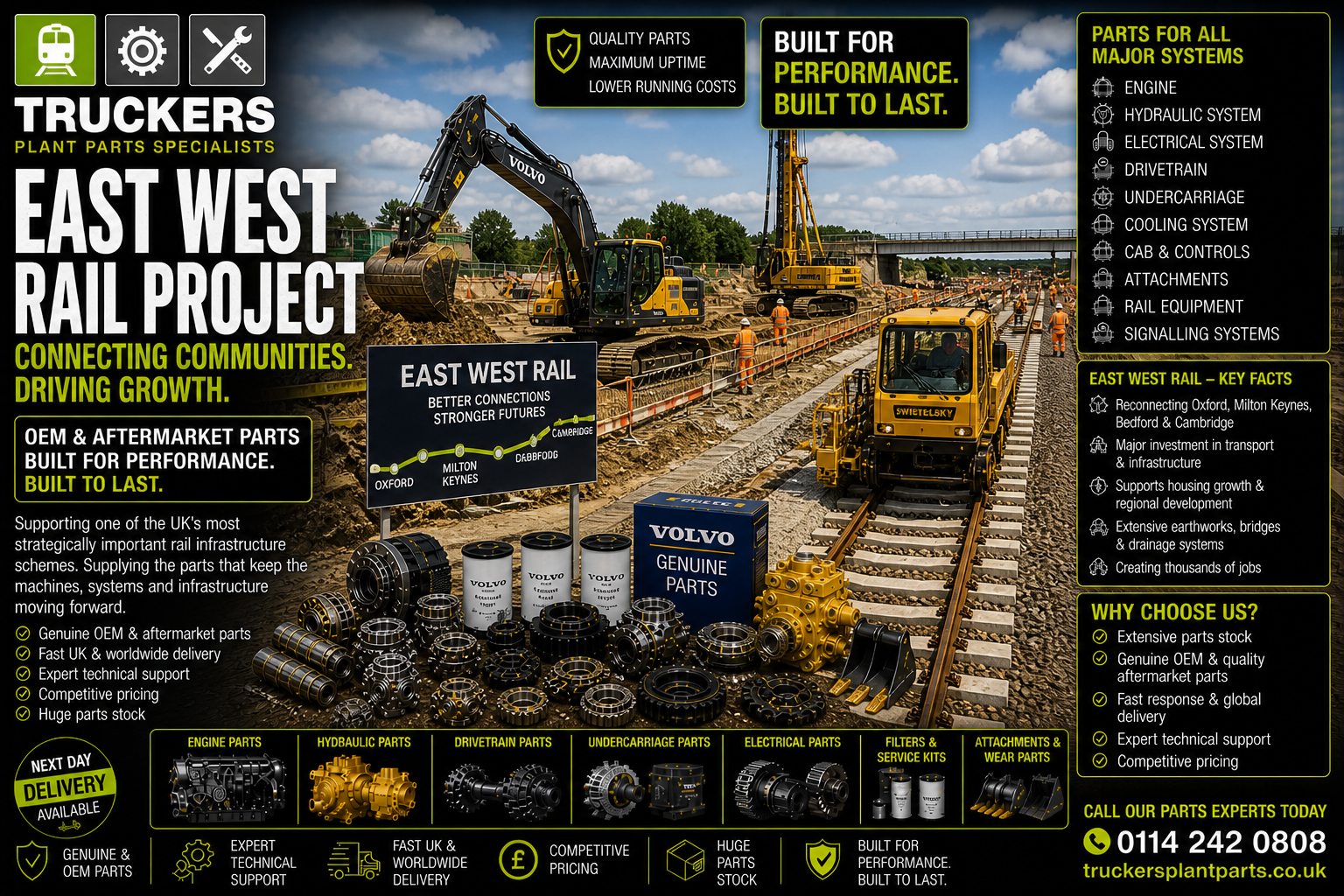
East West Rail Construction Project and the Massive Infrastructure Operation Reconnecting Central England
East West Rail has become one of the most strategically important rail infrastructure programmes currently underway in Britain. Designed to reconnect Oxford, Milton Keynes, Bedford and Cambridge through upgraded rail links, new infrastructure and modern transport systems, the project represents far more than a traditional railway upgrade. It is a major regional development programme intended to reshape connectivity, stimulate economic growth and support one of the UK’s fastest-growing technology and housing corridors.
The scale of East West Rail places it among the country’s most significant long-term infrastructure investments. Extensive earthworks, bridge construction, drainage systems, track installation, signalling infrastructure and utility engineering all combine into a huge civil engineering operation stretching across multiple counties and operational zones simultaneously.
What makes East West Rail particularly important is the way it links transport infrastructure directly to long-term economic development. Improved rail connectivity between major towns, research hubs, universities and technology centres is expected to support housing expansion, commercial investment and broader regional growth throughout central England.
From a construction perspective, the project requires enormous quantities of heavy plant machinery, aggregates, steel, concrete and specialist rail engineering systems. Excavators, articulated dump trucks, piling rigs, rail engineering vehicles, compactors, cranes and drainage equipment all play major roles throughout the build programme.
One of the largest operational components of East West Rail involves bulk earthmoving and ground preparation works. Rail infrastructure requires extremely stable formations and carefully engineered subgrades capable of supporting long-term operational loads with minimal settlement. This creates major demand for excavators, bulldozers, graders and compaction systems throughout the route.
Crawler excavators are heavily used during trenching, grading, drainage installation and bulk excavation phases. Large machines fitted with hydraulic breakers, grabs and specialist attachments may also be used during bridge demolition, utility diversion works and structural preparation activities.
Articulated dump trucks transport huge quantities of spoil, aggregates and engineered fill materials across active construction zones. Machines from manufacturers such as Volvo Construction Equipment, Caterpillar Inc., Bell Equipment and Komatsu Ltd. are particularly suited to large rail infrastructure environments where reliability and continuous uptime are critical.
Bridge construction forms another major engineering category throughout the project. New rail crossings, overpasses and replacement bridge structures require piling rigs, crawler cranes, steel installation systems and large concrete operations. Some bridge sections may involve prefabricated assemblies requiring highly coordinated heavy lifting operations and specialist transport logistics.
Piling rigs play an essential role because railway infrastructure demands stable deep foundations beneath bridges, retaining structures and elevated sections of track. Rotary piling rigs, ground stabilisation systems and geotechnical engineering equipment are therefore expected to operate continuously throughout major civils phases.
Drainage infrastructure is another critically important component of East West Rail. Railway systems require highly effective water management because standing water and poor drainage can create long-term operational risks and structural degradation. Large drainage trenches, culverts, pumping systems and stormwater infrastructure therefore form major parts of the engineering programme.
Compaction machinery also plays a vital role throughout construction. Rail formations and embankments require precise compaction standards to ensure long-term stability and operational safety. Vibratory rollers, soil compactors and stabilisation systems operate continuously during earthworks phases to achieve the required engineering tolerances.
Track installation introduces another highly specialised phase of construction activity. Rail engineering vehicles, ballast systems, track laying machinery and precision alignment equipment are all required to install modern rail infrastructure accurately and efficiently.
Unlike conventional road construction, railway systems require extremely precise geometry and alignment standards. Small deviations in track positioning or settlement can affect ride quality, operational efficiency and long-term maintenance costs. Advanced surveying systems, laser-guided technologies and digital engineering platforms are therefore heavily integrated into modern rail construction projects.
Signalling infrastructure also forms a major part of the East West Rail programme. Modern railway signalling systems involve extensive communications infrastructure, electrical engineering, cabling systems and operational control technologies designed to improve safety and network efficiency.
Utility diversions represent another large operational challenge throughout the route. Existing underground utilities including water systems, gas infrastructure, electrical networks and communications cables often require relocation or protection before major earthworks and track construction can proceed.
Concrete infrastructure requirements across the project are substantial. Bridge structures, retaining walls, drainage systems, culverts, platforms and operational buildings all require large volumes of reinforced concrete. Dedicated batching systems and continuous supply chains are therefore important for maintaining construction progress.
Cranes and heavy lifting systems are widely used during bridge assembly, structural steel installation and track engineering operations. Large crawler cranes and mobile cranes are often required to position bridge beams, signalling gantries and prefabricated infrastructure components safely and accurately.
Heavy haulage logistics also become important during rail infrastructure projects because oversized bridge sections, piling rigs, cranes and track engineering equipment require coordinated transport operations across multiple active work zones.
Temporary haul roads, material compounds, fuel depots and machinery maintenance facilities effectively create large industrial support zones along the route during major construction phases. Keeping machinery fleets operational requires dedicated servicing infrastructure, replacement parts availability and preventative maintenance systems operating continuously behind the scenes.
Environmental management forms another major operational component of East West Rail. Rail developments often pass through sensitive ecological areas and populated regions requiring strict management of dust, noise, emissions and drainage impacts. Modern construction methods increasingly incorporate low-emission machinery, dust suppression systems and sustainable engineering techniques where practical.
Digital engineering technologies are heavily integrated into rail infrastructure projects of this scale. GPS machine control, telematics systems, drone surveying, 3D modelling and digital twin coordination platforms all help improve construction efficiency and engineering accuracy.
Telematics systems allow contractors to monitor machine productivity, fuel usage, maintenance schedules and operational performance across large machinery fleets in real time. Predictive maintenance systems help reduce downtime and improve operational continuity across long-term infrastructure projects.
Fuel management itself becomes a major logistical operation because excavators, dump trucks, cranes, compactors and rail engineering systems consume huge quantities of diesel throughout active construction periods. Dedicated refuelling systems and maintenance compounds are therefore essential.
The project is also expected to create major demand throughout the UK aggregates, steel fabrication, plant hire and engineering support industries. Quarries, transport firms, drainage specialists, signalling contractors and machinery suppliers all benefit from the long-term infrastructure investment associated with large rail projects.
Replacement parts demand across heavy machinery fleets is substantial. Hydraulic systems, filters, undercarriage components, bearings, cooling systems, pumps and drivetrain parts all experience significant wear during continuous heavy-duty operations.
For plant parts suppliers and engineering service companies, East West Rail represents a significant long-term opportunity within Britain’s growing infrastructure sector.
Beyond the engineering and machinery itself, the project carries major strategic importance because it is directly linked to future economic growth across central England. Improved transport connectivity between Oxford, Milton Keynes, Bedford and Cambridge is expected to encourage housing development, business investment and stronger links between major technology and research centres.
The corridor itself is often viewed as one of Britain’s most economically important future growth zones. Rail connectivity improvements therefore have implications extending well beyond transportation alone.
From a heavy engineering perspective, East West Rail showcases the extraordinary complexity of modern railway construction. Few projects combine such extensive earthworks, drainage systems, bridge engineering, signalling infrastructure and regional development objectives within a single coordinated programme.
Whether viewed as a transport upgrade, a regional growth strategy or a major civil engineering operation, East West Rail stands as one of the UK’s most important infrastructure projects shaping the future of Britain’s transport network.
FAQ: East West Rail Construction Project
1. What is East West Rail?
East West Rail is a major railway infrastructure project reconnecting Oxford, Milton Keynes, Bedford and Cambridge through upgraded rail links and modernised infrastructure.
2. Why is the project strategically important?
The scheme supports housing growth, economic development and improved transport connectivity across central England.
3. What types of construction works are involved?
Track installation, earthworks, drainage systems, signalling infrastructure, bridge construction and utility engineering all form major parts of the project.
4. What machinery is heavily used during rail infrastructure construction?
Excavators, articulated dump trucks, piling rigs, compactors, cranes and rail engineering vehicles are commonly used throughout the project.
5. Why are excavators important on rail projects?
Excavators are used for grading, trenching, drainage installation, utility works and bulk earthmoving operations.
6. Why are articulated dump trucks heavily used?
Articulated haulers transport spoil, aggregates and structural fill materials continuously across construction zones.
7. Which manufacturers commonly supply dump trucks for infrastructure projects?
Major manufacturers include Volvo Construction Equipment, Caterpillar, Bell Equipment and Komatsu.
8. Why are piling rigs important during railway construction?
Piling rigs install deep foundations beneath bridges, retaining walls and elevated rail structures.
9. What role do compactors play during construction?
Compaction systems ensure rail embankments and formations meet strict engineering standards for stability and long-term performance.
10. Why is drainage infrastructure so important?
Railways require highly effective drainage systems to prevent flooding, settlement and long-term structural deterioration.
11. What types of drainage systems are installed?
Drainage trenches, culverts, pumping systems and stormwater infrastructure are all commonly used.
12. Why is bridge construction a major component of the project?
New rail links require bridges, overpasses and structural crossings throughout the route.
13. What role do cranes play during rail infrastructure projects?
Cranes lift bridge sections, signalling gantries, steel structures and prefabricated engineering components.
14. Why is track installation highly specialised?
Railway systems require extremely precise geometry and alignment standards for safe and efficient operation.
15. What machinery is used for track installation?
Rail engineering vehicles, ballast systems, track laying machines and alignment equipment are commonly used.
16. Why is signalling infrastructure important?
Modern signalling systems improve railway safety, operational efficiency and network capacity.
17. What are utility diversions?
Existing underground infrastructure such as gas, electricity and communications systems often require relocation before construction can proceed.
18. Why are aggregates heavily used during rail projects?
Aggregates are essential for embankments, track foundations, drainage systems and structural fill applications.
19. What role does concrete infrastructure play?
Concrete is used in bridges, retaining walls, culverts, platforms and operational support structures.
20. Why are logistics operations important on large rail projects?
Machinery, materials and oversized infrastructure components must be transported efficiently across multiple active construction zones.
21. What role does digital technology play during construction?
GPS machine control, telematics systems, drone surveying and digital modelling improve coordination and engineering accuracy.
22. What is telematics in heavy equipment?
Telematics systems monitor machine productivity, fuel usage and maintenance requirements in real time.
23. Why is preventative maintenance important?
Continuous heavy workloads create significant wear on machinery and downtime can delay construction schedules.
24. What types of replacement parts are commonly used?
Hydraulic systems, filters, bearings, undercarriage parts, pumps and cooling systems all experience high demand.
25. How could East West Rail impact housing development?
Improved transport links can encourage new residential development throughout the corridor.
26. Why is the corridor important for technology and research industries?
The route links major research hubs, universities and technology centres across central England.
27. How does environmental management affect the project?
Dust control, emissions management, drainage protection and ecological mitigation are all important operational considerations.
28. Why are temporary construction compounds necessary?
Large projects require fuel systems, machinery servicing areas, material storage zones and contractor facilities.
29. How does East West Rail support regional economic growth?
Improved connectivity can stimulate investment, business expansion and long-term infrastructure development.
30. Why is East West Rail considered one of Britain’s most important infrastructure schemes?
The project combines strategic transport improvements with long-term housing, economic and regional development objectives across one of the UK’s fastest-growing corridors.