Truckers Plant Parts | UK's Heavy Equipment Parts Specialists
For Scrap Collections Call 07395 611 153 Only or Email [email protected] Not Truckers
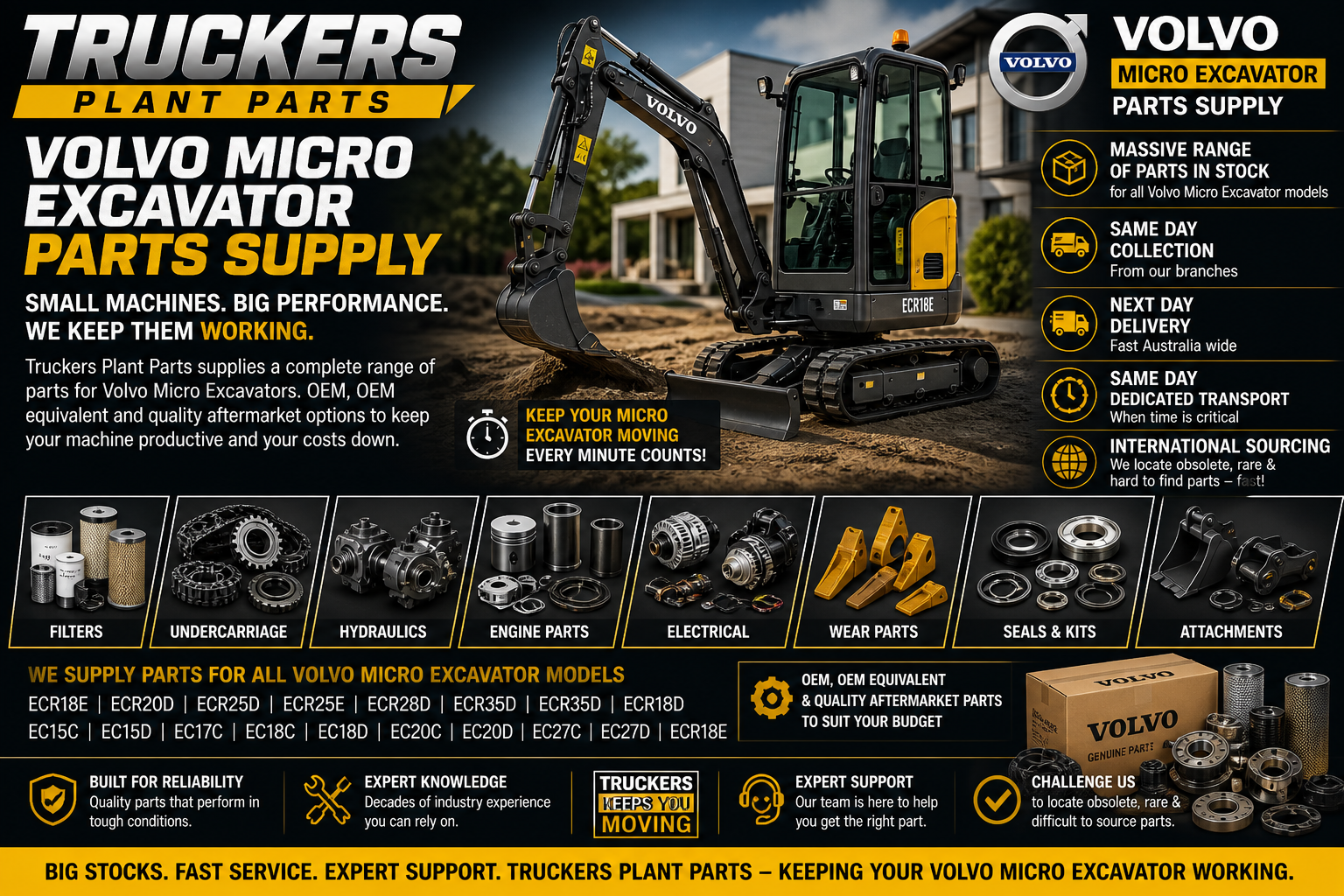
Volvo micro excavators are the smallest machines in Volvo’s excavator range, designed for ultra-restricted access work where even a standard mini excavator may be too large. These compact crawler machines are built for jobs inside narrow gardens, rear access paths, alleyways, tight urban developments, indoor demolition areas, basement works, landscaping projects, utilities, drainage, property maintenance, agriculture and confined construction environments where access is extremely limited.
Machines such as the Volvo EC15, EC18 and similar ultra-compact Volvo excavators are often described as micro excavators because they are small enough to pass through tight openings while still delivering useful digging performance, hydraulic attachment capability and reliable day-to-day productivity.
Although these are the smallest Volvo excavators, they remain serious working machines. They are relied upon by builders, landscapers, groundwork contractors, fencing installers, drainage specialists, utility teams, hire companies, councils, demolition crews and property developers who need professional equipment capable of working where larger machines cannot physically fit.
Micro excavators are particularly valuable in modern urban construction because access restrictions are becoming increasingly common. Tight housing developments, narrow side entries, protected landscaping, indoor refurbishment projects and confined utility works often make large machinery impractical. A Volvo micro excavator allows operators to dig, trench, break, grade, lift and prepare ground in locations where manual labour would otherwise be slow, expensive and physically demanding.
That productivity advantage makes micro excavators commercially important despite their small size.
A Volvo micro excavator may spend its day digging drainage trenches, preparing footings, removing spoil, installing services, breaking concrete, grading surfaces, clearing small demolition material, preparing landscaping features or operating specialist attachments in spaces where no larger excavator could operate safely.
Because these machines work constantly in difficult environments, reliability is critical. Micro excavators may be smaller than larger crawler machines, but they still rely on hydraulic pumps, travel motors, slew systems, cylinders, hoses, valves, filters, rubber tracks, rollers, idlers, sprockets, electrical systems, cooling systems, pins, bushes, buckets, quick couplers and service parts to function correctly.
A single hydraulic leak, electrical fault or failed final drive can still stop the machine completely.
Truckers Plant Parts support Volvo micro excavators with OEM, OEM-equivalent, rebuilt and quality aftermarket parts across all major systems. Support includes hydraulic pumps, hydraulic hoses, cylinders, seal kits, travel motors, final drives, slew motors, rubber tracks, rollers, sprockets, idlers, recoil systems, engines, filters, service kits, cooling systems, electrical components, joysticks, switches, lights, displays, cab parts, quick couplers, buckets, bucket teeth, cutting edges, pins, bushes and emergency VOR support.
Hydraulic performance is especially important on micro excavators because these machines often perform precision work. Operators may trench close to services, grade around structures, work inside buildings or excavate in highly confined areas where smooth control matters more than outright digging power.
Volvo micro excavators are respected because of their refined hydraulic feel and controllability. A good operator can perform extremely accurate work using a compact Volvo machine.
If the hydraulic system begins to fail, machine performance quickly suffers. Warning signs include weak digging force, slow boom movement, jerky controls, overheating hydraulic oil, noisy pumps, leaking hoses, weak tracking or poor attachment response. Hydraulic contamination should never be ignored because it can spread through the system and damage pumps, motors, cylinders and valves.
Rubber tracks and undercarriage systems are another major support category. Volvo micro excavators are commonly used on sensitive surfaces including gardens, paving, tarmac, pathways and landscaping areas. Rubber tracks reduce surface damage but still wear through constant use.
Tracking over rubble, sharp stone, demolition waste, kerbs and hardcore can shorten track life dramatically. Rollers, idlers, sprockets and tensioners also require regular inspection to prevent premature undercarriage wear.
Final drives and travel motors are vital because they allow the machine to move accurately in restricted areas. If a final drive begins to fail, the operator may notice grinding noise, oil leaks, overheating, slow travel, weak tracking or loss of drive. A failed final drive can completely immobilise the excavator.
Front-end wear is often underestimated on micro excavators. Pins, bushes, dipper-end components, coupler parts and bucket linkage systems still experience constant stress despite the smaller machine size. If wear is ignored, the repair can escalate into structural work, line boring or major front-end rebuilds.
Buckets and attachments are central to the versatility of Volvo micro excavators. Common attachments include trenching buckets, grading buckets, ditching buckets, hydraulic breakers, augers, grabs, compactors, rippers, thumbs and quick couplers. Attachments dramatically increase the machine’s usefulness but also increase stress on hydraulic circuits, pins, bushes, hoses and coupler systems.
Truckers can support attachment-related parts including coupler components, hydraulic hoses, breaker parts, bucket wear parts, auger-related components, linkage systems and hydraulic fittings.
Engine and service parts are equally important because micro excavators often work continuously in dusty, muddy or contaminated environments. Air filters, fuel filters, hydraulic filters, oil filters, coolant hoses, glow plugs, belts, starters, alternators and service kits all help keep the machine reliable.
Cooling systems should never be ignored simply because the machine is small. Micro excavators often work at low travel speed with heavy hydraulic demand, especially when trenching, breaking or grading. Blocked radiators, dirty cooling packs, fan problems or poor coolant condition can cause overheating which may damage hydraulic systems, engines and seals.
Electrical systems are also increasingly important. Modern micro excavators rely on sensors, switches, displays, wiring, safety circuits, relays, joysticks, lighting and warning systems to operate correctly. A relatively minor electrical issue can stop starting, disable attachments or limit machine operation.
Volvo micro excavators are popular because they combine compact dimensions with professional-grade quality. Operators often value their smooth controls, strong hydraulic feel, reliability, visibility and stability compared with cheaper compact alternatives.
For buyers of used Volvo micro excavators, condition matters far more than appearance alone. Rubber tracks, final drives, hydraulic performance, slew condition, pin and bush wear, leaks, service history, cooling condition and electrical faults should all be checked carefully.
A well-maintained Volvo micro excavator can remain productive for many years. A neglected one can become surprisingly expensive if hydraulic contamination, overheating, track wear or final drive issues are ignored.
Truckers Plant Parts help operators keep Volvo micro excavators working with fast parts supply, technical identification support, OEM and aftermarket options, same-day collection where available, next-day delivery and urgent sourcing for older or difficult-to-find components.
Even the smallest excavator can become the most important machine on site when access is limited and the job still needs doing properly.
Volvo micro excavators are the smallest tracked excavators in Volvo’s range, designed for ultra-restricted access work.
Machines such as the EC15, EC18 and similar ultra-compact Volvo excavators are commonly classed as micro excavators.
They can work in spaces where larger excavators cannot fit.
Landscaping, groundwork, drainage, utilities, agriculture, property maintenance, plant hire and small construction projects.
They reduce manual labour and improve productivity in confined spaces.
Yes. Micro excavators are popular hire machines for restricted-access projects.
Downtime delays projects and affects hire fleet revenue.
Hydraulic, engine, undercarriage, cooling, electrical, bucket, attachment and service parts.
Yes. OEM Volvo parts may be supplied depending on stock and availability.
Yes. OEM-equivalent and quality aftermarket options are available.
Yes. Urgent VOR support can be provided.
Vehicle Off Road, meaning the machine is down and needs urgent repair.
Yes. Stocked parts may be available for same-day collection.
Yes. Fast delivery is available on many parts.
Yes. Dedicated urgent transport can be arranged where necessary.
Hydraulic pumps, hoses, cylinders, valves, filters, motors and seal kits.
Hydraulics power digging, tracking, slewing and attachments.
Weak digging, slow movement, overheating, noisy pumps, leaks and jerky controls.
Yes. Hydraulic pumps for Volvo micro excavators can be supplied.
Contamination, overheating, blocked filters, poor servicing and wear.
It can damage pumps, valves, motors and cylinders throughout the machine.
Boom cylinders, arm cylinders, bucket cylinders and blade cylinders.
Seal leaks, rod damage, scoring and internal bypassing.
Final drives transfer power from the travel motor to the tracks.
Without them, the machine cannot move correctly.
Grinding noise, leaks, overheating, weak tracking and loss of drive.
Yes. Final drives and travel motors can be supported.
Rubber tracks, rollers, sprockets, idlers, recoil systems and tensioners.
They reduce surface damage and improve suitability for sensitive ground.
Sharp rubble, kerbs, hardcore, demolition debris and incorrect tension.
Yes. Rubber tracks for Volvo micro excavators can be supplied.
Incorrect tension shortens track and undercarriage life.
Pins, bushes, links, coupler parts and bucket linkage systems.
They carry repeated digging and attachment loads.
It can lead to structural damage and expensive repairs.
Yes. Pins, bushes and linkage parts can be supplied.
Bucket teeth, cutting edges, side cutters, pins and bushes.
They protect the bucket and maintain digging performance.
Yes. Breakers, augers, grabs, compactors and quick couplers are commonly used.
Attachments increase wear on hydraulics and linkage systems.
Yes. Coupler and hitch components can be supported.
Filters, belts, glow plugs, starters, alternators, sensors and cooling parts.
Filters protect engines and hydraulic systems from contamination.
Engine oil, fuel, air and hydraulic filters depending on machine model.
Engine oil, hydraulic oil, coolant, final drive oil and grease.
Correct oil protects systems from heat, wear and pressure.
Yes. Poor servicing can cause major hydraulic and engine failures.
Micro excavators still generate significant engine and hydraulic heat.
Radiators, coolers, hoses, fans, thermostats and coolant components.
Blocked coolers, fan faults, poor airflow, hydraulic overload or low coolant.
Switches, sensors, joysticks, wiring, relays, starters, alternators and displays.
Yes. Some faults can prevent starting or disable machine functions.
Glass, mirrors, seats, handles, wipers, lights and control components.
Micro excavators often work in confined areas close to structures and services.
Yes. They are known for smooth hydraulic control and refined operation.
Yes. They are designed for professional construction and groundwork use.
Yes, if condition and maintenance history are strong.
Tracks, hydraulics, final drives, slew play, engine condition, leaks and electrical systems.
It shows whether the machine has been maintained correctly.
Leaks, weak hydraulics, overheating, noisy final drives, worn tracks and excessive pin wear.
Yes. EC15 parts can be supported.
Yes. EC18 parts can be supported.
Yes. ECR18 parts can be supported.
Yes. Older and discontinued parts may often be sourced.
Yes. Current machine parts can be supported.
Specifications vary by machine build, year and hydraulic configuration.
Yes. Model, serial number, photos and part numbers help identification.
Machine model, serial number, photos and urgency level.
Incorrect parts delay repairs and extend downtime.
Some rebuilt components may be available depending on stock and machine model.
They can reduce costs while restoring performance.
OEM is often best for critical systems and newer machines.
Aftermarket can provide good value where quality is suitable.
It reduces downtime and protects machine value.
Tracks, leaks, fluids, hoses, pins, bushes and bucket wear.
Track damage can immobilise the machine.
Burst hoses can stop the machine and contaminate the hydraulic system.
Wear can spread into expensive structural repairs.
Final drive failure stops the machine moving.
Overheating can damage engines and hydraulics.
Worn parts reduce digging performance and damage buckets.
Greasing protects pins, bushes and slew systems.
Pins and bushes wear rapidly.
Yes. Oil analysis can identify wear and contamination early.
Dirty oil damages pumps, valves, motors and cylinders.
They can access gardens and restricted outdoor spaces easily.
They are ideal for trenching and cable installation in confined areas.
Their compact size allows access into restricted structures where appropriate.
Yes. Small demolition and strip-out work often relies on micro excavators.
They reduce rear overhang in confined spaces.
They improve access and reduce the need for manual excavation.
They combine compact size with professional-grade hydraulic control and build quality.
Truckers offer fast supply, technical support, OEM and aftermarket options and urgent delivery.
Yes. Other compact machine makes and models can also be supported.
Fast parts supply and emergency support help keep fleets earning.
Their ability to work productively in extremely restricted spaces.
To avoid downtime and protect machine reliability.
They reduce labour requirements and increase productivity in confined work areas.
Smooth hydraulics, refined controls, reliability and professional build quality.
Truckers Plant Parts support Volvo micro excavators with fast OEM, OEM-equivalent, rebuilt and quality aftermarket parts covering hydraulics, final drives, rubber tracks, undercarriage, engines, cooling systems, electrical components, buckets, attachments, service kits and emergency VOR requirements to keep even the smallest Volvo excavators productive and reliable.