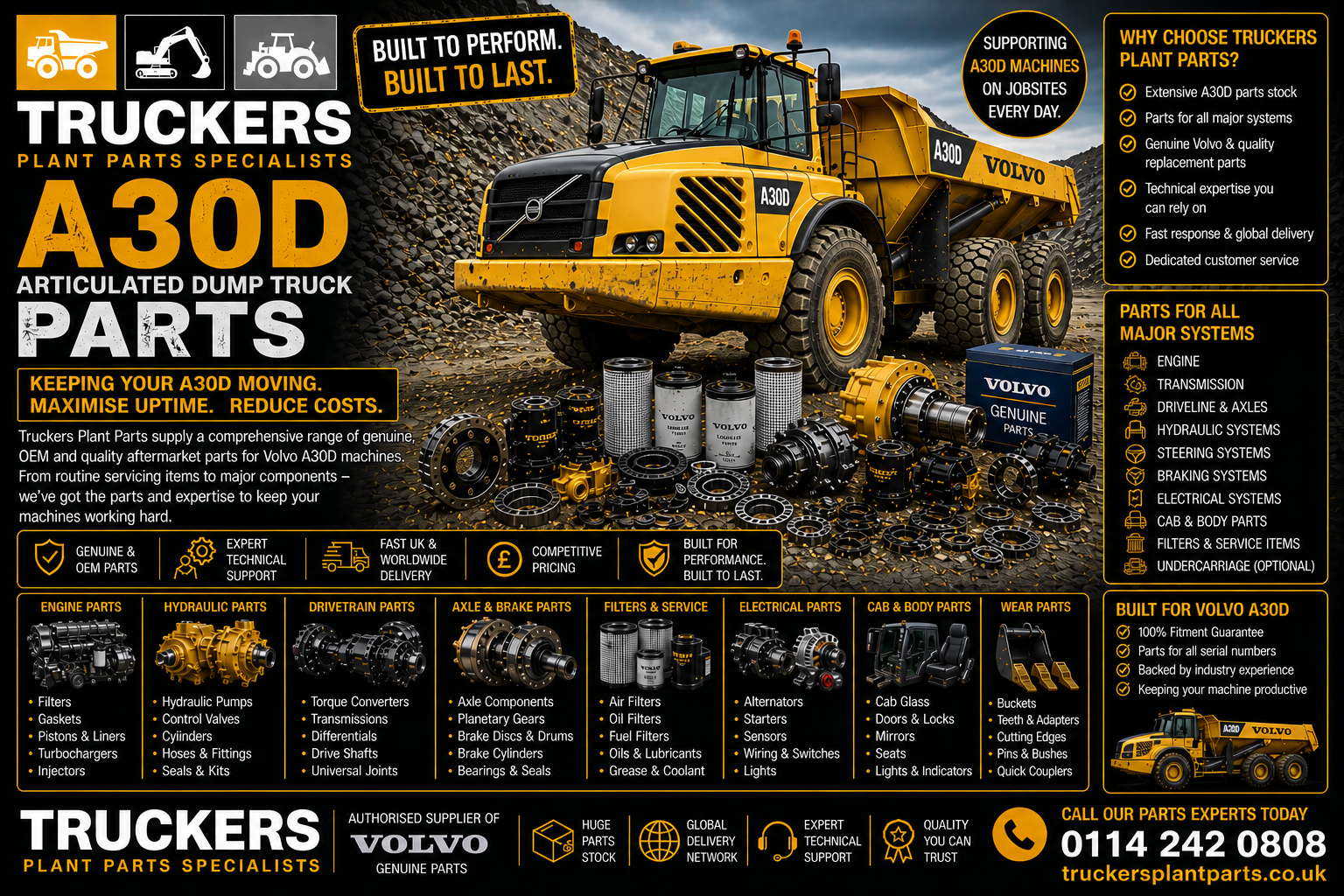
Volvo A30D Articulated Dump Truck: The Legendary Heavy Hauler That Still Defines The Sweet Spot For Many Operators
The Volvo A30D articulated dump truck occupies an extremely important place within the history of heavy off-road hauling because for many operators, contractors, quarry managers, and fleet owners, it represents one of the most balanced articulated dump trucks Volvo ever produced. It sits directly in the middle of multiple competing priorities that every heavy equipment business constantly tries to balance: payload capacity, fuel consumption, purchase price, maintenance costs, reliability, driveline durability, resale value, off-road performance, operational simplicity, and long-term profitability.
The A30D is especially interesting because it raises a question that continues to dominate fleet purchasing decisions even today:
What is actually the “best” articulated dump truck size and generation for real-world profitability?
Because bigger is not always better.
Newer is not always more profitable.
Higher payload does not automatically equal lower cost per tonne.
And the most technologically advanced machine is not always the machine that makes operators the most money over its lifetime.
The Volvo A30D sits directly inside that debate.
At first glance, the A30D looks like a straightforward evolution of Volvo’s earlier articulated dump truck philosophy. It retains the classic Volvo articulated chassis layout, six-wheel-drive system, balanced weight distribution, strong driveline architecture, and highly respected off-road traction systems that helped make Volvo the global benchmark for articulated hauling performance.
However, the A30D introduced a major step upward in hauling capability compared with smaller machines like the A25D while still retaining much of the mechanical simplicity and rugged durability operators associated with the D-Series generation.
This is one reason the A30D became so respected globally.
For many fleets, the A30D sits within what could genuinely be called the “sweet spot” of articulated hauling.
The machine is large enough to move serious material volumes efficiently while still remaining manageable in terms of fuel consumption, tyre costs, driveline stress, transport logistics, maintenance access, and operational simplicity. Once articulated dump trucks begin moving into larger payload categories such as A40, A45, and especially A60 territory, the entire economics of ownership begin changing significantly.
The A30D avoids much of that escalation while still delivering highly capable production hauling.
This matters enormously in real-world quarrying and earthmoving operations.
At approximately 28-tonne payload capacity depending on configuration, the Volvo A30D sits at a point where operators can achieve excellent production output without moving into the extremely high running costs associated with ultra-large articulated haulers. The machine is capable of supporting major quarry operations, earthmoving projects, bulk excavation work, mining support, forestry operations, landfill sites, and large civil engineering projects while still maintaining relatively balanced ownership costs.
For many contractors, that balance becomes more valuable than simply chasing maximum payload.
The A30D belongs firmly to what many operators consider the golden era of Volvo articulated hauler engineering.
The D-Series machines were built during a period where Volvo had already perfected much of its core articulated hauling philosophy but before the industry became heavily dominated by emissions systems, advanced software integration, highly complex telematics architectures, and electronically dependent driveline management systems.
This gives the A30D a unique position historically.
It is modern enough to deliver excellent hauling performance, strong cab comfort, dependable hydraulics, and refined driveline behaviour while still remaining relatively mechanical compared with later E, F, and especially G-Series articulated haulers.
For many fleet owners and plant engineers, this matters a great deal.
The A30D uses Volvo’s respected D-series engine platform designed around low-end torque delivery, severe-duty durability, and off-road hauling performance. The engine characteristics suit articulated hauling extremely well because these machines spend most of their lives operating under heavy load at moderate speeds rather than high-speed transport conditions.
Torque matters more than speed.
The A30D therefore feels extremely strong under load, especially climbing quarry haul roads, operating through mud, or pulling across unstable terrain conditions.
This is one area where the D-Series trucks continue earning enormous respect.
The driveline systems on the A30D are widely regarded as exceptionally durable when properly maintained. Volvo’s balanced articulation geometry, differential systems, planetary hub reductions, suspension integration, and traction systems combine to create a machine that feels incredibly planted and stable even in severe off-road conditions.
This stability is one reason operators often continue preferring Volvo articulated haulers over competitors.
The A30D also benefits from what many mechanics describe as “practical complexity.”
The machine includes enough modern systems to improve operational refinement and hauling efficiency without becoming overwhelmingly software dependent. Compared with later F-Series and G-Series articulated haulers, the A30D remains far more approachable from a servicing and repair perspective.
This becomes increasingly important as machines age.
Modern articulated dump trucks deliver incredible efficiency and machine intelligence, but they also rely heavily on advanced electronics, emissions systems, software integration, sensors, ECUs, telematics systems, and electronically managed driveline optimisation. While these technologies absolutely improve fuel economy and operational performance, they can also increase diagnostic complexity and repair costs over long ownership cycles.
The A30D largely avoids the worst of that escalation.
This is one reason resale values on well-maintained D-Series Volvo articulated haulers often remain surprisingly strong.
Many operators actively seek these machines specifically because they offer a balance between modern productivity and manageable long-term ownership. Independent contractors, quarry operators, earthmoving fleets, and export markets continue valuing D-Series trucks heavily because they remain productive, durable, and serviceable even after extremely high operating hours.
Compared with the later A30E, the A30D feels more mechanical and slightly less refined overall. The E-Series introduced more electronic integration, improved fuel efficiency, smoother driveline management, and enhanced operator refinement. However, the A30E also marked the beginning of Volvo’s stronger move toward electronically optimised hauling systems.
Some operators welcomed this immediately.
Others preferred the older D-Series approach.
The A30F pushed further into intelligent driveline optimisation, advanced diagnostics, fuel-saving systems, and electronically managed machine behaviour. Fuel economy improved again, machine response became smoother, and operational efficiency increased. The operator environment also became more refined and technologically advanced.
But complexity increased too.
The A30G then pushed even further toward fully intelligent hauling optimisation with advanced telematics integration, dynamic traction systems, sophisticated machine management software, fuel optimisation algorithms, and extensive electronic system integration.
From a pure engineering perspective, the A30G is unquestionably the superior machine technologically.
But real-world fleet economics are not always that simple.
Because the “best” articulated dump truck depends entirely on the operator’s priorities.
If maximum fuel efficiency and advanced fleet management are the primary goals, the newer G-Series machines become extremely attractive.
If simplified long-term ownership, manageable maintenance, strong reliability, lower purchase costs, easier diagnostics, and strong resale value matter more, many operators still strongly favour the D-Series trucks.
This is where the A30D becomes especially interesting.
The A30D arguably sits directly in the middle of the articulated dump truck market’s most important balancing point.
It is big enough to deliver serious production capability while still remaining relatively economical to run compared with ultra-large articulated haulers.
Once fleets begin moving toward A40, A45, and especially A60 trucks, operational economics change dramatically.
Fuel consumption increases significantly.
Tyre costs rise enormously.
Driveline stresses become more severe.
Transport logistics become more complicated.
Maintenance costs escalate.
Workshop infrastructure requirements increase.
Site conditions must support larger machines properly.
Loading equipment requirements increase.
The entire production ecosystem becomes more expensive.
This does not mean larger articulated haulers are inefficient.
Far from it.
In massive mining support or ultra-high-volume quarry operations, machines like the A45 and A60 can achieve excellent cost-per-tonne efficiencies.
However, for many medium-to-large quarrying, earthmoving, civil engineering, and contracting businesses, the A30 class often represents the practical sweet spot between productivity and operational cost control.
This is one reason the A30 category has remained so successful globally for decades.
The A30D specifically benefits from this balance because it combines that ideal payload category with older Volvo D-Series ruggedness and mechanical simplicity.
Many experienced operators would argue that the “happy medium” for articulated hauling probably sits somewhere between the A30 and A40 classes depending on site conditions, annual production requirements, and ownership strategy.
Below A25 size, fleets sometimes sacrifice production efficiency on large jobs.
Above A45 size, ownership costs and infrastructure demands escalate rapidly.
The A30 category often lands directly in the operational middle ground.
When evaluating the best overall articulated dump truck generation, the answer becomes even more complicated.
The D-Series often wins on rugged simplicity, long-term serviceability, mechanical accessibility, and resale loyalty among experienced operators.
The E-Series improved refinement and efficiency while retaining much of the older machine philosophy.
The F-Series probably represents one of the strongest overall balances between modern efficiency and manageable complexity.
The G-Series delivers the highest technological sophistication, fuel optimisation, and intelligent fleet integration but also introduces the greatest system complexity.
There is no universal answer because every fleet operates differently.
A major multinational quarrying operation running highly managed modern fleets may absolutely maximise profitability using advanced G-Series trucks integrated into telematics-heavy fleet management systems.
Meanwhile, an independent earthmoving contractor may make significantly more long-term profit operating reliable D-Series or F-Series trucks with lower ownership costs and easier maintenance.
This is exactly why the Volvo A30D continues holding such strong respect globally.
It represents a machine that many operators believe still delivers one of the best overall compromises between payload, durability, simplicity, off-road capability, fuel consumption, resale strength, and real-world profitability.
Truckers Plant Parts continue supporting Volvo A30D articulated dump trucks with OEM and quality aftermarket components covering engines, transmissions, differentials, axles, articulation systems, hydraulic systems, steering systems, suspension systems, brake systems, cooling systems, electrical systems, cab components, filters, driveline components, body wear systems, service kits, and major overhaul parts.
Many A30D machines continue working daily worldwide because the platform itself remains fundamentally strong, practical, and economically viable even years after production.
That longevity says a great deal about the machine.
The Volvo A30D ultimately represents more than simply another articulated dump truck.
It represents one of the clearest examples of where heavy equipment engineering, real-world profitability, operator trust, and practical long-term ownership all intersect successfully.
And for many operators, that balance still makes the A30D one of the smartest articulated hauling investments Volvo ever built.
FAQ – Everything You Need To Know About The Legendary Volvo A30D
1. What is the Volvo A30D?
The Volvo A30D is a heavy-duty articulated dump truck designed for quarrying, earthmoving, mining support, landfill, construction, forestry, demolition, and severe off-road hauling applications.
2. What type of machine is the A30D?
The A30D is an articulated dump truck, commonly called an ADT or articulated hauler.
3. What does articulated mean?
Articulated means the machine has a pivoting joint between the front tractor section and rear dump body section, allowing the chassis to flex independently over rough terrain.
4. Why are articulated dump trucks important?
They allow heavy material to be moved efficiently across terrain where rigid trucks often struggle with traction and stability.
5. What industries use the Volvo A30D?
The machine is widely used in quarrying, aggregates, earthmoving, mining support, landfill operations, civil engineering, demolition, forestry, and infrastructure projects.
6. Why is the Volvo A30D so respected?
The A30D is respected because it combines payload capability, durability, manageable complexity, strong traction, reliability, and relatively balanced operating costs.
7. Why do many operators consider the A30D a sweet spot machine?
Because it balances payload size, fuel consumption, tyre costs, maintenance requirements, reliability, and productivity extremely well.
8. What payload does the Volvo A30D carry?
The A30D typically carries around 28 tonnes depending on specification and operating conditions.
9. Why is the 30-tonne class so popular?
It offers strong production performance without the extreme operating costs associated with ultra-large articulated haulers.
10. Is bigger always better with articulated dump trucks?
No. Larger trucks increase fuel consumption, tyre costs, driveline stress, and maintenance expenses significantly.
11. Why do some operators prefer A30 trucks over A45 or A60 trucks?
Many operators find the A30 category offers the best balance between productivity and ownership costs.
12. What makes the A30D historically important?
The A30D sits within what many operators consider the golden era of Volvo articulated hauler engineering.
13. Why is the D-Series considered special?
The D-Series combines modern hauling capability with relatively straightforward mechanical systems compared with newer generations.
14. What came before the A30D?
Earlier Volvo articulated haulers such as the A30C and older Volvo BM machines preceded it.
15. What came after the A30D?
The A30E followed the A30D.
16. What engine does the Volvo A30D use?
The A30D uses a Volvo diesel engine platform designed for low-end torque and severe-duty hauling performance.
17. Why is low-end torque important in articulated haulage?
Heavy payloads require strong pulling power at low engine speeds across rough terrain and steep haul roads.
18. Is the A30D considered powerful?
Yes. The machine delivers strong hauling performance for severe off-road applications.
19. Does the A30D perform well on steep quarry roads?
Yes. The machine was specifically designed for difficult off-road terrain and heavy hauling.
20. Is the A30D good in mud and soft ground?
Yes. Volvo articulated haulers are famous for strong traction in poor ground conditions.
21. What gives the A30D strong traction?
All-wheel drive, balanced articulation geometry, differential systems, suspension engineering, and chassis balance all contribute.
22. Does the A30D use six-wheel drive?
Yes. The machine uses full all-wheel-drive capability.
23. Why is all-wheel drive important on ADTs?
It maximises traction and productivity across difficult terrain.
24. What materials does the A30D haul?
Rock, aggregate, soil, overburden, clay, demolition debris, timber products, and bulk earthmoving materials.
25. Is the A30D good for quarry work?
Yes. Quarry hauling is one of the machine’s most common applications.
26. Why are articulated dump trucks ideal for quarries?
They handle rough haul roads and unstable terrain extremely well.
27. Does the A30D work well in landfill environments?
Yes. The machine performs very well on soft and unstable ground.
28. Is the A30D suitable for forestry work?
Yes. Volvo articulated haulers are widely used in forestry operations.
29. Why do forestry operators like articulated haulers?
They maintain traction and stability in muddy and uneven woodland terrain.
30. Does the A30D perform well in earthmoving projects?
Yes. Bulk earthmoving is one of the machine’s strongest applications.
31. Why is the A30D considered reliable?
The driveline, engine, articulation systems, and chassis design developed a reputation for long-term durability.
32. Is the A30D mechanically simpler than newer Volvo trucks?
Yes. Compared with later F-Series and G-Series trucks, the A30D is relatively straightforward.
33. Why does simpler machine design matter?
Simpler systems can reduce diagnostic complexity and simplify repairs.
34. Did the A30D use fewer electronics than later trucks?
Yes. The machine predates much of the advanced electronic integration seen later.
35. Why do some operators prefer fewer electronics?
Some fleets prefer easier diagnostics and more mechanically focused systems.
36. Does the A30D still feel modern enough to operate productively?
Yes. The machine remains highly productive even today.
37. Did the A30D improve significantly over older Volvo trucks?
Yes. The D-Series refined operator comfort, hydraulics, driveline systems, and overall hauling performance.
38. Was the A30D more refined than older Volvo BM trucks?
Yes. Operator comfort and machine smoothness improved greatly.
39. What suspension systems does the A30D use?
Heavy-duty suspension systems designed for rough terrain stability and operator comfort.
40. Why is suspension important on articulated dump trucks?
Suspension affects ride quality, stability, traction, tyre wear, and chassis durability.
41. Did Volvo focus heavily on machine balance?
Yes. Volvo articulated haulers are known for excellent balance and stability.
42. Why is balance important?
Balanced machines maintain traction better and feel more stable under load.
43. Does the A30D have a comfortable cab?
Yes. The cab represented a major improvement over earlier generations.
44. What comfort features does the A30D include?
Improved seating, visibility, climate control, ergonomic controls, and reduced vibration.
45. Why is operator comfort important?
Operators often spend entire shifts repeatedly hauling material.
46. Does fatigue affect productivity?
Yes. Fatigue affects concentration, safety, and cycle efficiency.
47. Did the A30D improve visibility?
Yes. Volvo improved sightlines and operator awareness.
48. Why is visibility important on articulated dump trucks?
Operators constantly interact with excavators, haul roads, stockpiles, and site traffic.
49. Is the A30D considered durable structurally?
Yes. The chassis and dump body are built for severe-duty operation.
50. What causes wear on articulated dump trucks?
Heavy loads, rough terrain, abrasive material, haul roads, and long operating hours all create wear.
51. What parts commonly wear on A30D trucks?
Tyres, articulation joints, brakes, suspension components, hydraulic hoses, driveline parts, and body wear plates commonly wear.
52. What articulation components require maintenance?
Pins, bushes, bearings, seals, and steering cylinders require inspection and servicing.
53. Why are articulation joints so important?
The articulation joint controls steering and chassis flexibility.
54. Does the A30D use planetary hub reductions?
Yes. Volvo uses heavy-duty planetary systems for torque delivery and durability.
55. Why are planetary systems important?
They reduce driveline stress and improve off-road hauling performance.
56. What transmission does the A30D use?
The machine uses a heavy-duty automatic transmission designed for severe hauling environments.
57. Why is transmission durability important?
Articulated dump trucks operate continuously under very high torque loads.
58. Is the driveline on the A30D respected?
Yes. The driveline is widely regarded as one of the machine’s strongest features.
59. Did Volvo engineer the A30D for severe-duty use?
Absolutely. The machine was designed specifically for difficult off-road hauling.
60. Does the A30D require regular maintenance?
Yes. Proper servicing is essential for reliability and uptime.
61. What maintenance areas are most important?
Cooling systems, filters, articulation systems, brakes, driveline inspections, and hydraulic servicing are critical.
62. Why are filters important?
Filters protect engines, hydraulics, transmissions, and driveline systems from contamination.
63. Can contamination damage major components?
Yes. Contamination can destroy injectors, pumps, bearings, transmissions, and valves.
64. What hydraulic systems does the A30D use?
Hydraulics control steering, tipping functions, braking support, and machine systems.
65. Are hydraulics important on articulated dump trucks?
Yes. Hydraulics are essential for steering and dump body operation.
66. Does the A30D use advanced electronics like newer trucks?
No. Compared with newer machines, electronics remain relatively limited.
67. Is this an advantage?
For some operators yes, because it can simplify servicing and long-term ownership.
68. Does the A30D have strong resale value?
Yes. Well-maintained D-Series Volvo articulated haulers often retain strong demand.
69. Why do older Volvo ADTs retain value?
They are respected for durability, serviceability, and long-term reliability.
70. Why are D-Series trucks popular in export markets?
Many global operators value robust mechanically focused machines.
71. Is fuel consumption lower on newer generations?
Generally yes. F-Series and G-Series trucks improved fuel efficiency further.
72. Does this mean newer trucks are always more profitable?
Not necessarily. Higher purchase costs and increased complexity also affect ownership economics.
73. Why do some fleets still prefer D-Series trucks?
Lower ownership complexity and strong reliability remain highly attractive.
74. How does the A30D compare with the A30E?
The A30E introduced more electronics, improved efficiency, and smoother driveline refinement.
75. How does the A30D compare with the A30F?
The A30F added intelligent driveline optimisation, better diagnostics, and more advanced electronic integration.
76. How does the A30D compare with the A30G?
The A30G introduced advanced telematics, intelligent traction systems, and highly integrated smart hauling technologies.
77. Is the A30G more technologically advanced?
Yes. The G-Series is far more electronically sophisticated.
78. Does more technology always mean better value?
Not always. It depends on operating conditions, maintenance capability, and ownership strategy.
79. What is the “happy medium” many operators talk about?
The balance between payload, operating cost, complexity, reliability, and productivity.
80. Why do many operators believe the A30 category is the sweet spot?
Because it offers strong productivity without the massive operating costs of ultra-large haulers.
81. Are A40 and A60 trucks more expensive to operate?
Yes. Fuel, tyres, maintenance, and infrastructure costs increase substantially.
82. Does tyre cost rise dramatically on larger trucks?
Yes. Large articulated hauler tyres are extremely expensive.
83. Do larger trucks require bigger loading equipment?
Yes. Excavators and loaders must match truck capacity efficiently.
84. Why does fleet matching matter?
Poorly matched loading and hauling fleets reduce productivity and increase costs.
85. Does the A30D transport more easily than larger trucks?
Generally yes. Transport logistics become increasingly difficult as truck size increases.
86. Is workshop access easier on the A30D?
Compared with ultra-large articulated haulers, yes.
87. Why do many independent contractors like A30D trucks?
They offer strong production performance while remaining manageable financially and mechanically.
88. What tyres are used on the A30D?
Heavy-duty earthmover tyres designed for off-road hauling environments.
89. Why are tyres critical on articulated dump trucks?
Tyres affect traction, stability, load carrying capability, fuel efficiency, and operating costs.
90. What causes excessive tyre wear?
Sharp rock, poor haul roads, overloads, wheelspin, and improper operation increase wear.
91. What cooling systems does the A30D use?
Radiators, hydraulic coolers, oil coolers, and heavy-duty cooling systems.
92. Why are cooling systems important?
Heavy hauling creates enormous heat continuously.
93. Does quarry dust affect cooling systems?
Yes. Dust contamination is a major challenge in quarry operations.
94. Does Truckers Plant Parts support the A30D?
Yes. Truckers Plant Parts support OEM and aftermarket parts for Volvo A30D articulated haulers.
95. What systems are supported?
Engines, hydraulics, transmissions, axles, articulation systems, brakes, cooling systems, electrical systems, driveline components, and service parts.
96. Are cab parts supported?
Yes. Seats, glass, controls, lighting, and operator environment components are supported.
97. Are driveline parts available?
Yes. Differentials, final drives, shafts, bearings, and axle systems are supported.
98. Why is uptime important for articulated dump trucks?
Downtime affects production schedules, labour efficiency, and site profitability immediately.
99. Is the Volvo A30D still productive today?
Absolutely. Many A30D machines continue working globally in demanding production environments.
100. What best describes the Volvo A30D overall?
The Volvo A30D is one of the most balanced articulated dump trucks ever built, combining strong payload capability, severe-duty durability, manageable complexity, excellent traction, strong resale value, and long-term real-world profitability across quarrying, earthmoving, and heavy off-road hauling industries.
A20, A25, A25B, A25C, A25D, A25E, A25F, A25G, A30, A30C, A30D, A30E, A30F, A30G, A35, A35C, A35D, A35E, A35F, A35G, A40, A40C, A40D, A40E, A40F, A40G, A45G, A60H, A25, A30, A35, A40, A45, A50, A60H, A30