Lower Thames Crossing Construction Project and the Massive Heavy Plant Operation Behind Britain’s Biggest New Road Scheme
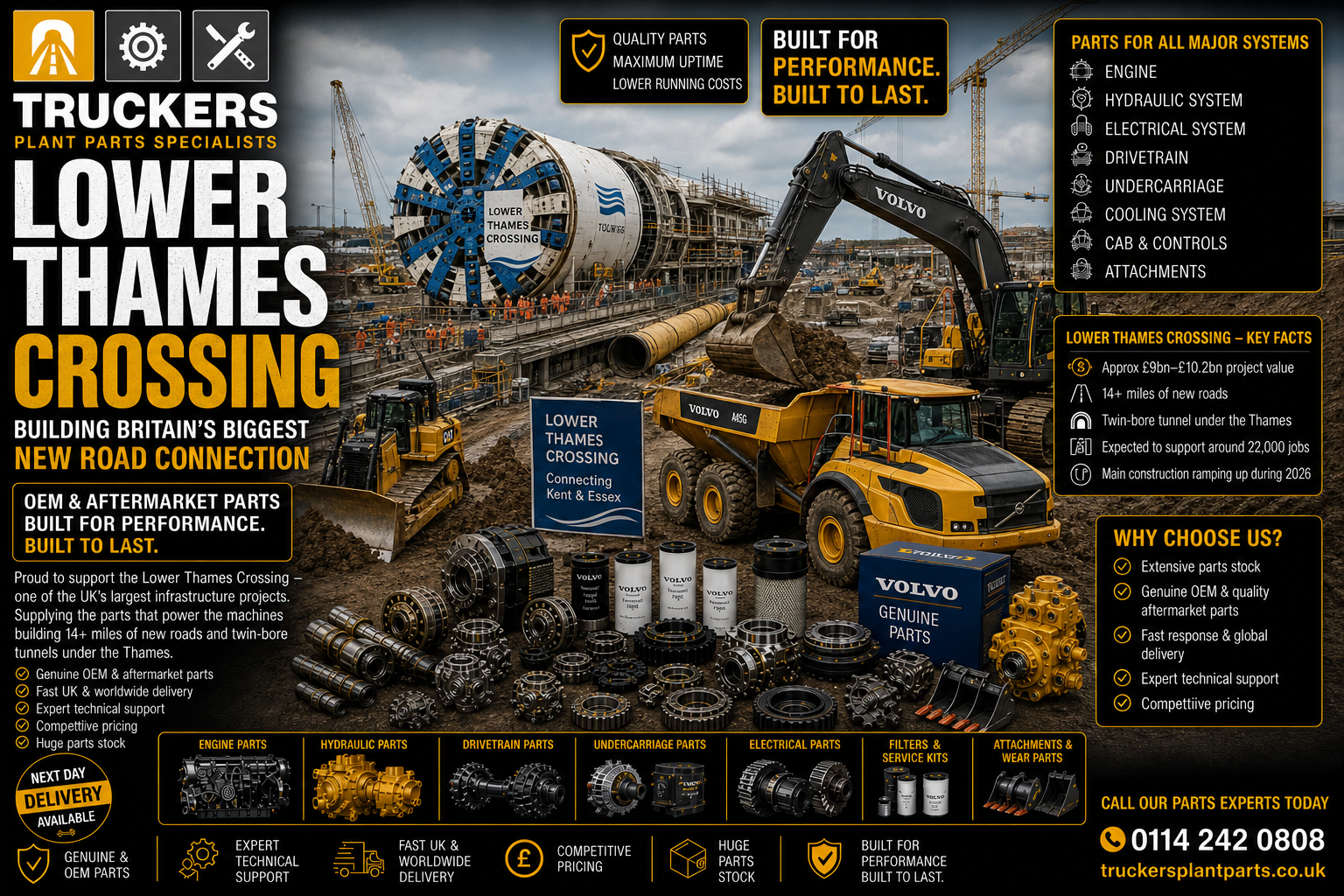
The proposed Lower Thames Crossing is rapidly becoming one of the most significant civil engineering and infrastructure developments in modern British history. Designed to relieve pressure on the heavily congested Dartford Crossing while improving freight movement, logistics efficiency and long-term transport resilience across the South East, the project represents far more than simply another road scheme. It is a vast engineering programme involving major tunnelling operations, extensive earthmoving, complex highway construction and some of the largest coordinated heavy plant deployments the UK has seen in decades.
Stretching across Kent, Thurrock and Essex, the Lower Thames Crossing will eventually form a major new transport artery beneath the River Thames through a twin-bore tunnel system connected to more than fourteen miles of new roads and upgraded infrastructure. The scale of the works places it firmly among Europe’s largest infrastructure schemes and potentially Britain’s most ambitious road construction project of the modern era.
What makes the project especially remarkable is not only the engineering challenge itself but also the enormous industrial ecosystem required to construct it. Vast fleets of excavators, articulated dump trucks, crushers, piling rigs, tunnel boring systems, concrete batching plants, heavy haulage vehicles and specialist engineering machinery will operate simultaneously across multiple large construction zones for years.
The Lower Thames Crossing is expected to become a defining project for the UK heavy construction industry because it combines nearly every major branch of modern civil engineering into one continuous programme. Highway construction, deep tunnelling, geotechnical engineering, environmental mitigation, bridge construction, drainage systems, logistics infrastructure and utility diversions all merge into a single enormous operational framework.
One of the largest components of the project involves bulk earthmoving and ground engineering. Millions of tonnes of soil, clay, chalk and excavated material will need to be removed, processed, transported and reused throughout the construction cycle. This creates huge demand for large-scale earthmoving machinery and haulage systems capable of operating continuously in challenging terrain and variable weather conditions.
Articulated dump trucks are expected to form the backbone of many material movement operations across the project. Large articulated haulers from manufacturers such as Volvo Construction Equipment, Caterpillar Inc., Bell Equipment and Komatsu Ltd. are likely to play major roles transporting excavated spoil between tunnel compounds, embankment construction zones, processing facilities and material storage areas.
The sheer scale of material movement means many sections of the project will resemble quarrying and mining operations rather than traditional road building environments. Temporary haul roads, fuelling stations, tyre service compounds and maintenance workshops will be critical infrastructure components supporting the heavy machinery fleet.
Earthmoving excavators will also dominate large portions of the project. From massive crawler excavators handling bulk excavation to precision machines working around utilities and drainage systems, excavators will perform thousands of critical tasks across the route. Deep cuttings, tunnel portals, embankments and junction developments all require extensive excavation activity before road construction can progress.
Large crawler excavators fitted with hydraulic breakers, shears and specialist attachments will likely be used extensively during demolition, utility relocation and structural preparation phases. In areas where existing infrastructure must be removed or modified, heavy demolition equipment becomes a central part of the project’s progression.
The tunnel system beneath the Thames represents one of the project’s most technically demanding engineering challenges. The twin-bore tunnel configuration will require advanced tunnel boring operations beneath one of the busiest and most strategically important river corridors in the country. Tunnel boring machines operating beneath the Thames will need to maintain extraordinary precision while dealing with difficult geology, groundwater pressure and highly regulated environmental conditions.
Modern tunnel boring machines used on projects of this scale are effectively underground industrial production systems. These giant machines integrate excavation heads, hydraulic systems, spoil conveyors, tunnel segment installation systems, electrical infrastructure and operator control centres into a continuously advancing engineering platform. Once fully assembled, tunnel boring systems can extend over one hundred metres in length and weigh thousands of tonnes.
Supporting the tunnel excavation itself is a vast network of additional plant and engineering systems. Ventilation equipment, slurry treatment plants, dewatering systems, spoil management conveyors, grout batching facilities, crawler cranes and segment transportation systems all work together to maintain continuous tunnelling operations beneath the river.
Tunnel construction also generates huge demand for concrete production. Thousands of reinforced concrete tunnel lining segments must be manufactured, transported and installed with absolute precision. Dedicated casting facilities and specialist logistics operations become essential to maintaining tunnel progress and avoiding costly delays underground.
Crushing and screening plants will likely play a major role throughout the Lower Thames Crossing project. Excavated material can often be processed and reused for embankments, road foundations and construction fill applications. This reduces waste transport requirements while improving sustainability and lowering the overall environmental impact of the scheme.
Large mobile crushers, scalping screens and material handling systems will therefore become central to site logistics operations. Processing material on-site improves efficiency while reducing the number of external aggregate deliveries required throughout the construction programme.
Aggregates themselves represent another enormous requirement for the project. Vast quantities of crushed stone, sand, gravel and engineered fill materials will be required for road bases, drainage systems, embankments and concrete production. Managing aggregate supply chains on a project of this magnitude becomes a major logistical operation involving quarries, rail freight, road transport and storage facilities operating in synchronisation.
Heavy haulage logistics will also become critically important throughout construction. Moving large tunnel boring machine components, crawler cranes, bridge sections, piling rigs and oversized machinery requires specialist transportation planning and escort operations. Some machinery components may require night-time movement schedules and temporary road modifications to reach construction compounds safely.
Piling rigs and ground engineering equipment will form another major machinery category on the project. Large retaining structures, bridge supports, tunnel portals and elevated road sections all require deep foundation systems capable of supporting enormous structural loads. Rotary piling rigs, diaphragm wall systems and soil stabilisation machinery will therefore become highly visible across multiple construction areas.
The geological complexity of parts of the route means geotechnical engineering will be especially important. Ground conditions beneath and around the Thames can vary significantly, requiring careful monitoring and specialist engineering techniques to ensure long-term structural stability and tunnel safety.
Compaction machinery will also operate continuously throughout road construction zones. Vibratory rollers, soil compactors and stabilisation equipment ensure embankments and subgrades meet strict engineering tolerances necessary for modern highway infrastructure. Poor compaction can lead to settlement issues and long-term structural problems, making this phase critical to the road’s future durability.
Road construction machinery itself forms another enormous category of equipment involved in the project. Asphalt pavers, milling machines, surfacing plants, kerbing systems and road marking equipment will eventually move into the later stages of construction once the heavy civils and structural phases are complete.
Concrete batching plants will likely be established close to major construction compounds to support continuous supply demands. The volume of concrete needed for tunnels, retaining walls, drainage systems, bridge structures and road infrastructure is immense. Reliable batching operations are essential to maintaining project schedules and structural quality standards.
Large cranes will dominate bridge and structural assembly areas. Crawler cranes and mobile cranes capable of lifting hundreds of tonnes may be required for tunnel support systems, bridge beams, steel structures and precast concrete sections. Crane operations on infrastructure projects of this scale involve detailed lift planning, ground engineering and logistics coordination.
Environmental engineering also forms a major component of the Lower Thames Crossing project. Noise reduction systems, dust suppression equipment, water treatment facilities, ecological mitigation zones and emissions control measures will all play major roles throughout the construction process. Environmental sensitivity surrounding the Thames estuary means strict monitoring and compliance systems will operate continuously.
Modern digital construction technologies are expected to be heavily integrated into the project. GPS machine control systems, drone surveying, telematics, digital modelling and real-time fleet management software now allow contractors to improve excavation accuracy, reduce fuel consumption and optimise machine utilisation across large construction programmes.
Telematics systems on modern heavy machinery provide contractors with live operational data including fuel burn, idle time, maintenance intervals and machine productivity. On projects as large as the Lower Thames Crossing, data-driven fleet management becomes essential for controlling costs and improving operational efficiency.
The project is also expected to generate huge long-term demand for replacement parts, wear components and plant maintenance services. Hydraulic systems, undercarriage components, engine parts, cooling systems, filters, bearings, final drives and braking systems all experience significant wear under continuous heavy workloads.
For plant parts suppliers and machinery service companies, the Lower Thames Crossing represents one of the most important future infrastructure opportunities in the UK construction market. Projects operating continuously over many years create substantial demand for fast-response technical support, preventative maintenance and rapid parts availability.
Employment generation linked to the project is expected to be enormous. Around twenty-two thousand jobs may be supported directly and indirectly through construction activity, supply chains, engineering services, logistics operations and manufacturing support. The scale of workforce mobilisation required further demonstrates how large and economically significant the project truly is.
Beyond the engineering itself, the Lower Thames Crossing also represents a major strategic investment in the future of British transport infrastructure. The Dartford Crossing has long been one of the UK’s most congested transport bottlenecks, affecting freight movement, commuting patterns and regional economic productivity. Creating additional crossing capacity beneath the Thames has therefore become both an engineering necessity and a national economic priority.
As construction activity ramps up further through 2026 and beyond, the Lower Thames Crossing is expected to become one of the most machinery-intensive infrastructure projects in Britain. From giant articulated haulers moving millions of tonnes of material to tunnel boring machines operating deep beneath the riverbed, the project showcases the extraordinary scale of modern civil engineering and the heavy plant industry that powers it.
FAQ: Lower Thames Crossing Construction Project
1. What is the Lower Thames Crossing project?
The Lower Thames Crossing is a major new road and tunnel infrastructure scheme designed to improve transport links between Kent and Essex while reducing congestion at the Dartford Crossing. The project includes a large twin-bore road tunnel beneath the River Thames alongside more than fourteen miles of new roads and upgraded transport infrastructure. It is expected to become Britain’s largest road construction project and one of Europe’s most important infrastructure developments.
2. Why is the Lower Thames Crossing needed?
The existing Dartford Crossing is one of the busiest and most congested road crossings in the UK. Delays regularly impact freight movement, logistics operations, commuters and supply chains throughout the South East. The Lower Thames Crossing is designed to provide additional river crossing capacity, improve traffic flow and strengthen transport resilience across the region.
3. How much is the Lower Thames Crossing expected to cost?
Current estimates place the project value at approximately £9 billion to £10.2 billion depending on final construction stages, inflation pressures and infrastructure delivery requirements. This makes it one of the most expensive road infrastructure projects ever undertaken in Britain.
4. What are the main features of the project?
The project includes a twin-bore tunnel beneath the River Thames, more than fourteen miles of new roads, major junction upgrades, bridge structures, environmental mitigation works, drainage systems, embankments and large-scale civil engineering operations across Kent, Thurrock and Essex.
5. Why is the tunnel section such a major engineering challenge?
Constructing large road tunnels beneath the River Thames involves difficult geology, groundwater pressure, environmental restrictions and extremely precise engineering requirements. Tunnel boring operations must maintain exact alignment while safely excavating beneath one of the UK’s busiest river corridors.
6. What types of machinery will be used on the Lower Thames Crossing?
The project will require huge fleets of heavy construction machinery including articulated dump trucks, crawler excavators, bulldozers, tunnel boring machines, piling rigs, crushers, screening plants, crawler cranes, telehandlers, compaction rollers, asphalt paving machinery and specialist tunnelling support equipment.
7. Why are articulated dump trucks so important on the project?
Articulated dump trucks are essential because the project involves moving massive quantities of spoil, aggregates, clay and excavated material. These machines transport material between excavation zones, stockpiles, tunnel compounds and embankment construction areas while operating in difficult off-road conditions.
8. Which articulated hauler manufacturers are likely to be involved?
Major heavy equipment brands commonly used on UK infrastructure projects include Volvo Construction Equipment, Bell Equipment, Caterpillar Inc. and Komatsu Ltd.. Machines in the 30-tonne to 60-tonne class are particularly suited to large earthmoving operations.
9. What role do excavators play on the Lower Thames Crossing?
Excavators will be used for bulk excavation, trenching, utility works, drainage installation, loading haul trucks, tunnel preparation and grading operations. Large crawler excavators are expected to dominate earthmoving areas while smaller machines will operate in tighter construction zones and around existing infrastructure.
10. What are tunnel boring machines?
Tunnel boring machines are giant underground engineering systems designed to excavate tunnels while simultaneously installing structural tunnel linings. These machines contain rotating cutter heads, hydraulic systems, spoil conveyors, ventilation equipment and precision guidance systems.
11. How large are the tunnel boring machines used on projects like this?
Tunnel boring machines used on major infrastructure schemes can weigh thousands of tonnes and extend more than one hundred metres in length once fully assembled. They are effectively moving underground factories operating continuously throughout the tunnel excavation process.
12. Why are aggregates so important for the project?
Huge quantities of aggregate materials are needed for road foundations, embankments, drainage systems, concrete production and structural fill. Crushed stone, gravel and engineered materials form critical layers throughout modern highway construction.
13. What role do crushers and screening plants play?
Crushing and screening plants process excavated material so it can be reused within the project. This reduces waste transport requirements while helping produce engineered fill materials for embankments and road construction. Mobile crushers and screening systems are likely to operate continuously on-site.
14. Why is heavy haulage logistics such a major part of the project?
Large infrastructure schemes require transportation of oversized machinery, tunnel boring machine components, piling rigs, cranes, bridge sections and construction materials. Heavy haulage operations often require specialist route planning, escort vehicles and temporary road management measures.
15. What are piling rigs used for on the Lower Thames Crossing?
Piling rigs install deep foundations for bridges, retaining walls, tunnel portals and elevated structures. These foundations are essential for supporting heavy loads and ensuring long-term structural stability in varying ground conditions.
16. Why is ground engineering so important on this project?
Ground conditions around the Thames can vary significantly. Engineers must stabilise soils, control settlement and manage groundwater to ensure the safety and durability of roads, tunnels and supporting structures. Ground engineering therefore becomes a major part of the construction process.
17. What types of cranes are used on large infrastructure projects like this?
Crawler cranes, mobile cranes and tower cranes are all used to lift heavy structural components, tunnel systems, reinforcement cages, steel sections and bridge beams. Some cranes operating on projects of this scale are capable of lifting hundreds of tonnes.
18. How much earthmoving will the project involve?
The Lower Thames Crossing will involve excavation and transportation of millions of tonnes of material including clay, soil, chalk and spoil. This creates an operational environment similar to a large quarry or mining project in some construction areas.
19. Why is machine reliability so important on major infrastructure projects?
Breakdowns can delay entire construction sequences. If dump trucks stop moving spoil or tunnel systems experience downtime, costs can escalate rapidly. Reliable machinery, preventative maintenance and rapid access to replacement parts are therefore essential.
20. What types of spare parts are heavily used on projects like this?
Common replacement components include hydraulic pumps, filters, bearings, slew rings, engine parts, undercarriage systems, hoses, cooling components, final drives, sensors, braking systems and transmission parts. Continuous heavy workloads create significant wear across large fleets.
21. How important are undercarriage components on crawler equipment?
Undercarriage systems experience constant wear from mud, abrasive material and heavy loads. Tracks, rollers, idlers and sprockets are essential for maintaining stability and traction on crawler excavators, bulldozers and cranes operating on rough terrain.
22. Will the project create jobs?
The Lower Thames Crossing is expected to support around twenty-two thousand jobs directly and indirectly across construction, engineering, logistics, manufacturing, plant hire, aggregate supply and support services.
23. How does the project benefit the UK construction industry?
Large infrastructure schemes create huge demand for machinery, plant hire, aggregates, replacement parts, engineering services and specialist contractors. This stimulates activity across the entire heavy construction supply chain.
24. What environmental measures are expected during construction?
Environmental mitigation measures include dust suppression, water treatment systems, noise barriers, ecological protection zones and emissions monitoring. Sustainability requirements are likely to encourage greater use of low-emission and hybrid machinery where practical.
25. Why are concrete batching plants important on the project?
The volume of concrete required for tunnels, retaining walls, bridge structures and road systems is enormous. Dedicated batching plants ensure continuous supply while maintaining quality control and reducing transportation delays.
26. What role does digital technology play in modern infrastructure projects?
Modern projects use GPS machine control, telematics, drone surveying, 3D modelling and digital construction management systems to improve efficiency, reduce waste and monitor machinery performance in real time.
27. Why is fuel management a major operational challenge?
Large fleets of heavy machinery consume huge amounts of diesel every day. Dedicated fuelling systems, mobile refuelling vehicles and fuel monitoring infrastructure are necessary to keep operations running efficiently.
28. How does the project compare to HS2 in terms of machinery demand?
While HS2 focuses heavily on rail infrastructure and tunnelling, the Lower Thames Crossing combines highway engineering, tunnelling and large-scale earthworks. Both projects require massive fleets of heavy machinery and represent some of the UK’s largest construction programmes.
29. What impact will the crossing have on UK logistics and freight movement?
The new crossing is expected to reduce congestion around Dartford, improve freight efficiency and strengthen transport connectivity throughout the South East. This could improve reliability for supply chains and commercial transport operators.
30. Why is the Lower Thames Crossing considered one of Britain’s most important infrastructure projects?
The project addresses a long-standing national transport bottleneck while delivering major economic, logistics and infrastructure improvements. The scale of engineering involved, combined with the tunnel system and extensive road construction, places it among the UK’s most ambitious modern civil engineering projects.