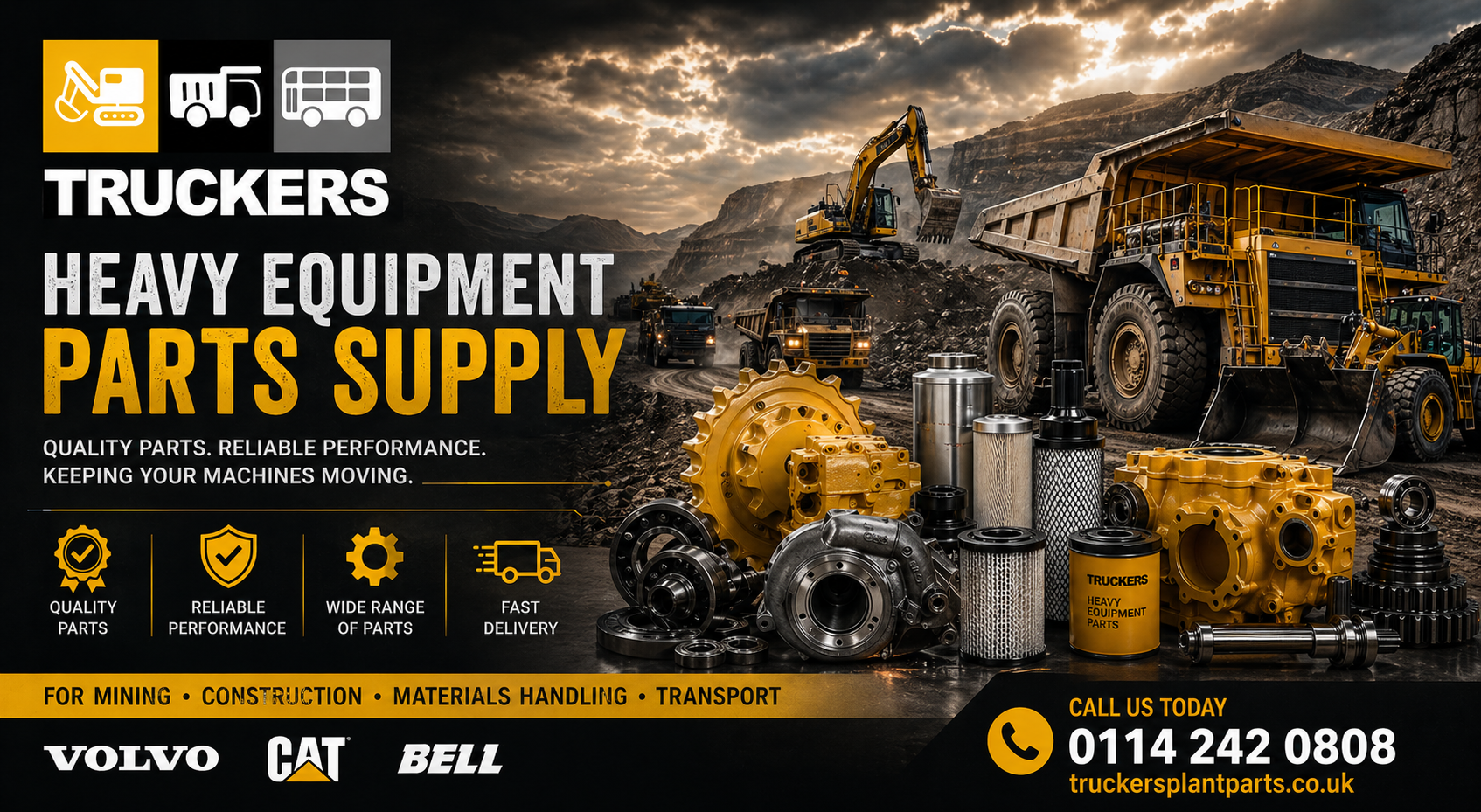
Introduction: The Backbone of Every Machine Is Its Spare Parts
Heavy equipment is built for durability—but no machine is immune to wear, stress, and eventual component failure. Whether operating in construction, mining, quarrying, or materials handling, one factor determines operational success more than anything else:
Access to high-quality heavy equipment spares.
From excavators and articulated dump trucks to wheel loaders and bulldozers, the ability to source reliable replacement parts quickly is what keeps machines moving and projects on schedule.
This guide covers everything you need to know about heavy equipment spares, including part types, OEM vs aftermarket options, sourcing strategies, and cost optimisation.
What Are Heavy Equipment Spares?
Heavy equipment spares are replacement components used to maintain, repair, or upgrade machinery across industries such as:
- Construction
- Mining & quarrying
- Agriculture
- Transport & logistics
- Materials handling
These parts range from small consumables like filters to major assemblies like engines and hydraulic systems.
Why Spare Parts Quality Matters
Using low-quality or incompatible parts can lead to:
- Increased downtime
- Reduced machine efficiency
- Premature wear of connected components
- Higher long-term costs
- Safety risks on site
High-quality spares ensure:
- Maximum machine uptime
- Consistent performance
- Reduced maintenance frequency
- Extended equipment lifespan
OEM vs Aftermarket Heavy Equipment Spares
OEM (Original Equipment Manufacturer) Parts
OEM parts are made to the exact specifications of the original manufacturer.
Advantages:
- Guaranteed fit and compatibility
- High-quality materials
- Reliable performance
Considerations:
- Higher price point
- Sometimes limited availability
Aftermarket Parts
Aftermarket parts are produced by third-party manufacturers and can vary in quality.
Advantages:
- Cost-effective
- Widely available
- Ideal for high-wear components
Important Insight:
Premium aftermarket parts manufactured to OEM tolerances can deliver equivalent performance at a significantly lower cost, especially when sourced from trusted suppliers.
Core Categories of Heavy Equipment Spares
1. Engine Components
Essential for power generation and machine operation.
Includes:
- Pistons and rings
- Cylinder heads
- Fuel injectors
- Turbochargers
- Water pumps
- Oil pumps
2. Hydraulic System Parts
Hydraulics power most machine functions.
Includes:
- Hydraulic pumps
- Valves
- Cylinders
- Motors
- Seal kits
Hydraulic efficiency directly affects productivity.
3. Transmission & Drivetrain Parts
Responsible for power transfer.
Includes:
- Gearboxes
- Torque converters
- Differentials
- Axles
- Drive shafts
4. Undercarriage Components
One of the highest wear areas in tracked machines.
Includes:
- Track chains
- Rollers
- Idlers
- Sprockets
- Track pads
Undercarriage maintenance is often the largest cost category.
5. Wear Parts & Ground Engaging Tools (GET)
Designed to absorb impact and abrasion.
Includes:
- Bucket teeth
- Cutting edges
- Blades
- Side cutters
6. Filtration Systems
Critical for system longevity.
Includes:
- Oil filters
- Air filters
- Fuel filters
- Hydraulic filters
7. Electrical & Electronic Components
Modern machinery relies on electronics.
Includes:
- Sensors
- Control units (ECUs)
- Wiring harnesses
- Displays
8. Seals, Bearings & Fast-Moving Parts
Often overlooked but essential.
Includes:
- Bearings
- Bushings
- Seals
- Gaskets
Heavy Equipment Spares by Machine Type
Excavators
- Hydraulic systems
- Buckets and attachments
- Undercarriage parts
Articulated Dump Trucks (ADTs)
- Drivetrain components
- Suspension systems
- Hydraulic tipping systems
Wheel Loaders
- Transmission systems
- Bucket components
- Axles and braking systems
Bulldozers
- Track systems
- Blades
- Final drives
Common Causes of Spare Part Failure
Understanding failure points helps reduce downtime.
Wear and Tear
Natural degradation from constant use.
Poor Maintenance
Missed servicing leads to system contamination.
Low-Quality Parts
Inferior materials reduce lifespan.
Incorrect Installation
Misalignment or improper fitting causes early failure.
How to Identify the Correct Spare Parts
Accurate identification ensures compatibility.
Use:
- OEM part numbers
- Machine model and serial number
- Manufacturer diagrams
- Technical specifications
Key Tip:
Always cross-reference part numbers when sourcing aftermarket alternatives.
Cost Optimisation Strategies
1. Use Aftermarket Parts Strategically
Ideal for wear items and non-critical components.
2. Bulk Buy High-Usage Parts
Filters, seals, and GET parts are perfect for stock purchasing.
3. Work with Specialist Suppliers
They can:
- Source rare parts
- Provide technical guidance
- Offer faster delivery
4. Preventative Maintenance
Replacing parts early reduces costly breakdowns.
UK Market Demand for Heavy Equipment Spares
In the UK, demand is driven by:
- Infrastructure projects
- Quarrying and aggregates
- Construction growth
Buyers prioritise:
- Fast delivery
- Competitive pricing
- Reliable supply chains
- OEM and aftermarket availability
Why Choose a Specialist Spare Parts Supplier
A dedicated supplier provides:
- Access to global inventory
- OEM and premium aftermarket options
- Technical expertise
- Rapid dispatch and delivery
For businesses operating fleets, this results in:
- Reduced downtime
- Better cost control
- Improved operational efficiency
Final Thoughts: Keeping Machines Moving
Heavy equipment spares are not just replacement items—they are critical to operational success.
By focusing on:
- High-quality parts
- Accurate sourcing
- Preventative maintenance
you ensure:
- Maximum uptime
- Lower total cost of ownership
- Long-term machine reliability
SEO Targeting Block
Primary Keywords:
- Heavy Equipment Spares
- Plant Machinery Spare Parts
- Construction Equipment Parts UK
- Heavy Machinery Parts Supplier
- OEM and Aftermarket Equipment Parts
Secondary Keywords:
Heavy equipment wear parts
Excavator spare parts
Dump truck parts
Hydraulic system parts
Undercarriage components