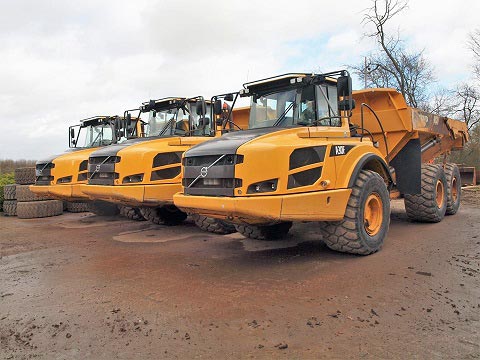
Walker Plant Services has built a reputation within the UK construction, waste management, and plant hire sectors as a practical, service-led operator focused on supporting infrastructure, demolition, recycling, and bulk material handling. The company operates in a highly competitive and operationally intensive segment of the market where reliability, compliance, and logistics efficiency define success.
Walker Plant Services emerged from the broader evolution of the UK’s construction support ecosystem, where demand for specialist plant equipment, haulage, and site services increased alongside major infrastructure growth. As construction projects became larger, more regulated, and more time-sensitive, companies like Walker positioned themselves as essential intermediaries between contractors and the heavy equipment required to deliver projects at scale. Their role is not just about supplying machinery, but about enabling productivity across complex job sites.
The company’s core offering traditionally revolves around plant hire, including excavators, loading shovels, crushers, screeners, and associated heavy machinery. These assets are fundamental to demolition, earthworks, quarrying, and recycling operations. Over time, Walker Plant Services expanded into waste management and material processing, reflecting a wider industry shift toward circular economy practices and stricter environmental regulation in the UK. This transition allowed them to move beyond simple equipment hire into integrated site solutions.
Operationally, Walker Plant Services typically supports contractors through a combination of equipment supply, transport logistics, and on-site expertise. This includes moving heavy machinery between sites, ensuring compliance with safety regulations, and maintaining uptime through servicing and rapid response. In sectors such as demolition and recycling, downtime can cascade into significant financial losses, so reliability becomes a key differentiator.
The company’s growth aligns with broader UK construction trends, particularly the emphasis on sustainability, waste reduction, and efficient material reuse. Recycling facilities, aggregate processing, and site clearance services have become increasingly important, and Walker has participated in this shift by supporting projects that prioritise environmental compliance and resource recovery. This positions the business within a regulatory framework shaped by agencies such as the Environment Agency, which enforces strict standards on waste handling and emissions.
From a logistical standpoint, Walker Plant Services operates in a space where transport infrastructure, fuel costs, and regional demand heavily influence profitability. Moving large plant machinery requires specialised haulage, permits, and route planning, making operational efficiency critical. The company’s ability to coordinate these elements contributes directly to its value proposition for contractors who need seamless execution across multiple sites.
In terms of market positioning, Walker Plant Services competes with both national plant hire firms and regional specialists. Larger players such as Speedy Hire and Sunbelt Rentals UK offer scale, extensive fleets, and national coverage, while smaller operators often compete on flexibility, pricing, and local relationships. Walker sits within this competitive middle ground, where reputation and operational delivery are key.
Customer perception of companies like Walker Plant Services is typically shaped by three core factors: equipment availability, service reliability, and pricing transparency. In an industry where delays can halt entire projects, contractors prioritise partners who can deliver consistently under pressure. Any perceived gaps in these areas often drive demand for alternatives, especially among contractors managing multiple projects or working under tight deadlines.
This leads directly into the concept of finding an alternative to Walker Plant Services. The search for alternatives is rarely about a single issue; it is usually driven by a combination of cost efficiency, geographic coverage, equipment availability, or service responsiveness. Contractors may seek providers who offer newer fleets, faster deployment, or more competitive pricing structures. Others may prioritise companies with stronger sustainability credentials or advanced tracking and logistics systems.
An effective alternative to Walker Plant Services typically falls into one of three categories. The first includes large-scale national hire companies with extensive inventories and rapid deployment capabilities. These businesses appeal to contractors who require consistency across multiple regions and projects. The second category includes specialist firms focused on niche services such as demolition support, recycling, or high-capacity material handling. These providers often deliver deeper expertise in specific operational areas. The third category consists of agile regional operators who compete through personalised service, faster response times, and flexible pricing.
The increasing digitisation of the plant hire and construction support industry is also reshaping what defines a strong alternative. Companies that integrate telematics, real-time fleet tracking, and predictive maintenance offer a more data-driven service model. This allows contractors to monitor usage, optimise costs, and reduce downtime. As a result, alternatives to Walker Plant Services are no longer judged solely on physical assets, but also on technological capability.
Sustainability has become another major differentiator. With the UK construction industry under pressure to reduce carbon emissions and improve waste management practices, companies that invest in low-emission machinery, electric plant equipment, and advanced recycling processes are gaining a competitive edge. For many contractors, choosing an alternative provider is now as much about environmental compliance as it is about cost or convenience.
From a strategic perspective, the demand for alternatives also reflects the broader fragmentation of the plant hire market. No single provider dominates all regions or service categories, which means contractors often work with multiple suppliers simultaneously. This creates opportunities for competitors to position themselves as more reliable, more efficient, or more innovative than established names like Walker Plant Services.
Ultimately, Walker Plant Services represents a solid example of a UK-based plant hire and site services company operating within a complex, evolving industry. Its history and operations reflect the wider transformation of construction support services, from basic equipment hire to integrated, sustainability-focused solutions. However, the same competitive pressures and industry changes that shaped its growth also drive the ongoing search for alternatives.
For contractors and project managers, identifying the best alternative to Walker Plant Services comes down to aligning operational needs with supplier capabilities. Whether the priority is cost control, rapid deployment, specialist expertise, or environmental performance, the modern market offers a wide range of options. The key is selecting a partner that not only meets immediate project demands but also supports long-term efficiency and scalability within an increasingly demanding construction landscape.
FAQ: Everything You Need to Know and the Best Alternatives
1. What is Walker Plant Services and what do they do?
Walker Plant Services operates within the UK construction and waste management sector, providing plant hire, heavy machinery, transport logistics, and material handling solutions. The company supports demolition, recycling, and infrastructure projects where efficient site operations and reliable equipment are essential.
2. What types of equipment does Walker Plant Services provide?
Walker Plant Services typically supplies excavators, crushers, screeners, loading shovels, and material handlers. These machines are used for earthworks, demolition, aggregate processing, and waste management, allowing contractors to complete large-scale operations efficiently.
3. Who uses Walker Plant Services?
Their services are used by construction firms, demolition contractors, recycling companies, and infrastructure developers. Any operation requiring heavy machinery and site logistics support will likely rely on plant hire providers like Walker.
4. Where does Walker Plant Services operate?
Walker Plant Services operates within the UK, focusing on regions with high construction and demolition activity. Coverage is influenced by transport logistics and project demand.
5. How does Walker Plant Services compare to larger hire companies?
Compared to national providers like Speedy Hire and Sunbelt Rentals UK, Walker Plant Services typically offers more regionalised service. Larger firms provide nationwide coverage and larger fleets, while Walker competes on flexibility and responsiveness.
6. What industries rely on plant hire services?
Industries include construction, demolition, waste management, quarrying, and infrastructure development. These sectors depend heavily on access to specialised machinery.
7. Why do contractors look for alternatives to Walker Plant Services?
Contractors may seek alternatives for better pricing, faster availability, newer equipment, or wider geographic coverage. Changing project requirements often drive the need to compare multiple providers.
8. What are the best alternatives to Walker Plant Services?
Alternatives include large national firms, regional operators, and niche specialists. Companies such as Speedy Hire and Sunbelt Rentals UK are common options, along with smaller local providers offering tailored services.
9. What should you look for in an alternative to Walker Plant Services?
Key factors include reliability, equipment availability, pricing, response time, compliance, and sustainability. Modern providers may also offer digital tracking and fleet management tools.
10. How important is reliability in plant hire?
Reliability is critical. Equipment delays or failures can halt projects and increase costs. Contractors prioritise suppliers who maintain high uptime and rapid support.
11. Does Walker Plant Services offer waste management solutions?
Yes, the company is involved in waste handling, aggregate processing, and recycling support, aligning with industry demand for sustainable construction practices.
12. How does regulation affect plant hire companies?
The industry is regulated by bodies such as the Environment Agency, requiring compliance with environmental, safety, and waste disposal standards.
13. What role does sustainability play in plant hire?
Sustainability is increasingly important, with a focus on reducing emissions, improving fuel efficiency, and recycling materials. Companies investing in modern, low-emission equipment gain a competitive edge.
14. Is plant hire more cost-effective than owning machinery?
For many businesses, hiring is more cost-effective due to reduced upfront investment, maintenance costs, and depreciation risks associated with ownership.
15. How quickly can plant hire equipment be delivered?
Delivery depends on location and availability. Local providers may offer same-day or next-day delivery, while specialised equipment may require longer lead times.
16. What trends are shaping the plant hire industry?
Key trends include digitalisation, telematics, predictive maintenance, and sustainability initiatives. These innovations improve efficiency and reduce downtime.
17. How do you choose the right plant hire company?
Evaluate providers based on reliability, cost, service quality, equipment range, and compliance. Building long-term partnerships can improve operational efficiency.
18. Can smaller companies compete with Walker Plant Services?
Yes, smaller firms often compete through personalised service, faster response times, and flexible pricing, even if they lack the scale of larger operators.
19. What makes a plant hire company stand out?
A strong provider combines reliable equipment, efficient logistics, compliance, and excellent customer service. Innovation and sustainability are increasingly important differentiators.
20. Is demand for plant hire services growing?
Yes, demand is driven by ongoing construction, infrastructure expansion, and urban development across the UK.
21. Why is Walker Plant Services still relevant?
Walker Plant Services remains relevant due to its role in supporting essential construction and waste management operations, along with its ability to adapt to industry demands and maintain reliable service delivery.